MAH MBA CET Analysis 2026: Three days , multiple slots, shifting difficulty levels, and thousands of MBA aspirants trying to crack the paper pattern - MAH MBA CET 2026 once again came across as a very fast-moving management entrance examination across all sessions. It was conducted by the State Common Entrance Test Cell, Maharashtra, from April 6 to April 8, 2026, and each day the exam ran in two shifts at multiple test centres. The full analysis for all shifts held on April 6, April 7, and April 8, 2026, has now been updated in this article. Because the test went through multiple sessions, the overall difficulty quotient, question mix, and section-wise movement didn’t stay uniform across the slots. So, a shift-wise breakdown becomes really crucial for aspirants preparing for the next round, MAH MBA CET 2026 Phase 2 on May 9, 2026. Here, you’ll find a complete day-by-day and slot-by-slot MAH MBA CET 2026 exam review, covering the overall difficulty level, good attempts, section-level commentary, topic-wise question spread, memory-based question patterns, expected cut-off signals, and the main takeaways gathered from every shift conducted between April 6 and April 8, 2026.
MAH MBA CET Analysis 2026 (April 6-8): Day-Wise & Slot-Wise Difficulty, Good Attempts, Section-Wise Review
MAH MBA CET Analysis 2026 Highlights
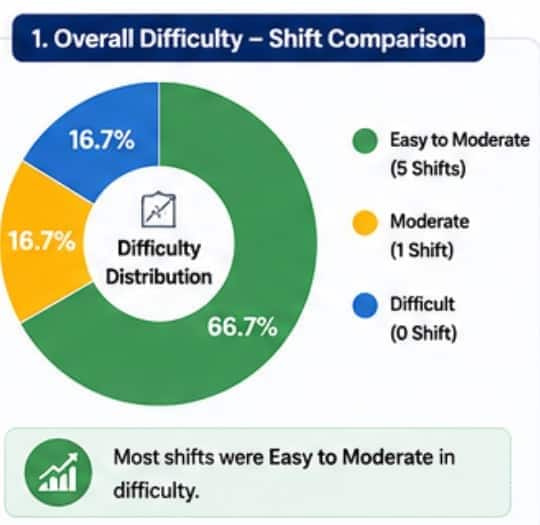
The overall difficulty level across April 6 and April 7 shifts was easy to moderate, but the paper felt lengthy, so time management became the biggest trouble spot, real quick
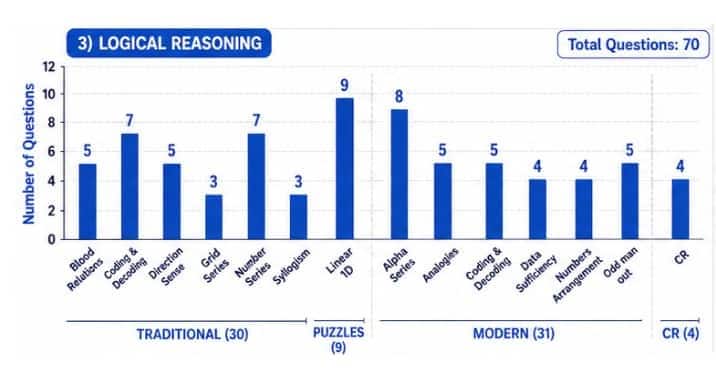
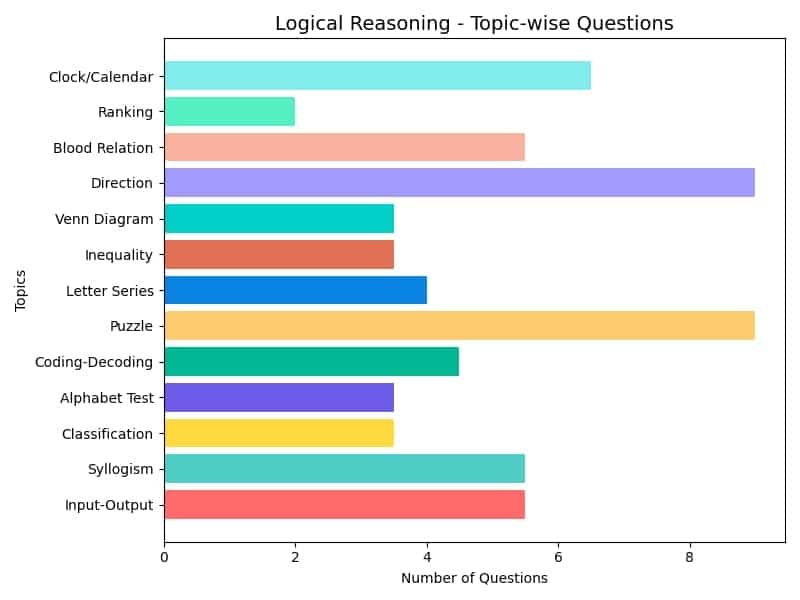
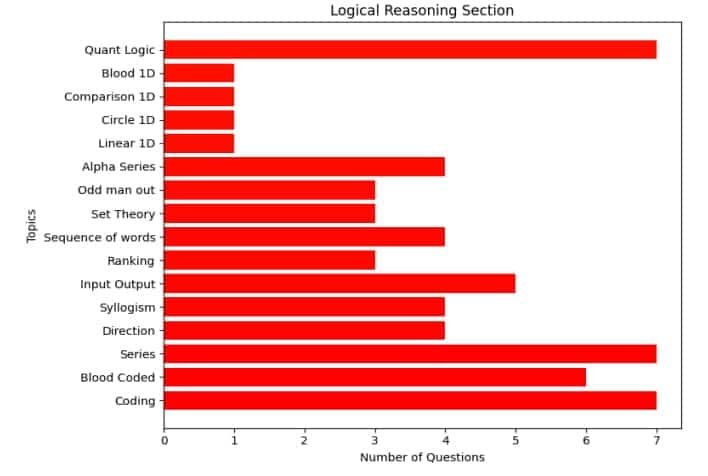
Logical Reasoning much ruled the entire paper, it had the highest question count (around 70–75), so it was the most scoring too but also the most time consuming part, not gonna lie
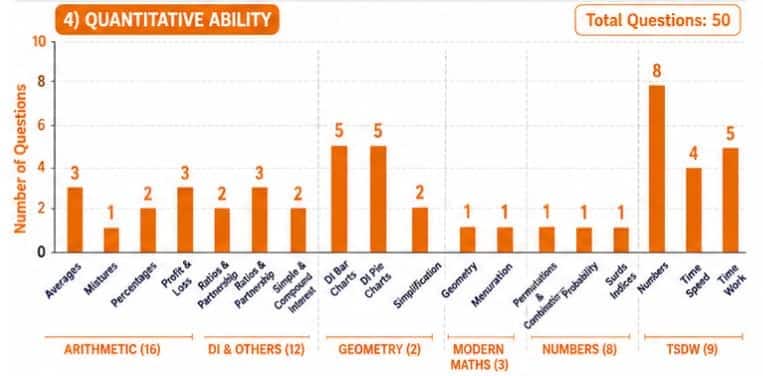
The Quantitative Aptitude portion was arithmetic heavy, with nearly 25–30 questions centered on basics like Time-Speed-Distance, Profit & Loss and Percentages
Data Interpretation came in 2 sets per shift, mostly straightforward though it still took extra time because of calculation speed and accuracy checks
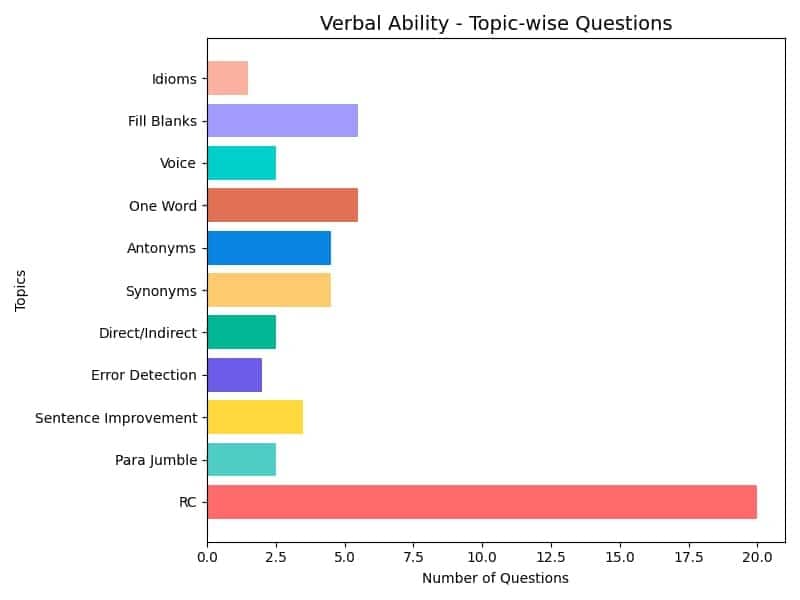
VARC stayed the easiest section, roughly 20 questions, from Reading Comprehension, and there was a noticeable push on vocabulary and grammar, which helped
One thing I noticed for April 7 Shift 1 was the missing puzzles in Logical Reasoning, instead there was a stronger focus on singlet type questions
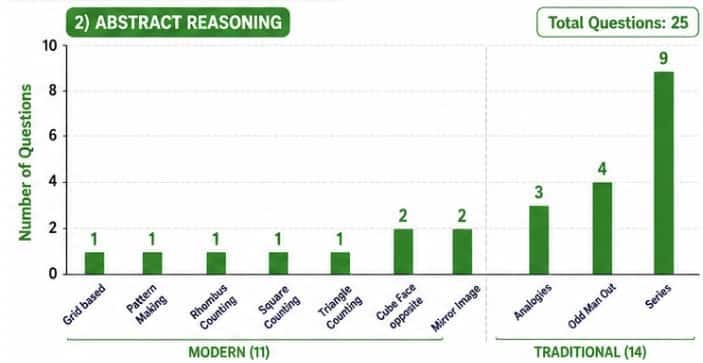
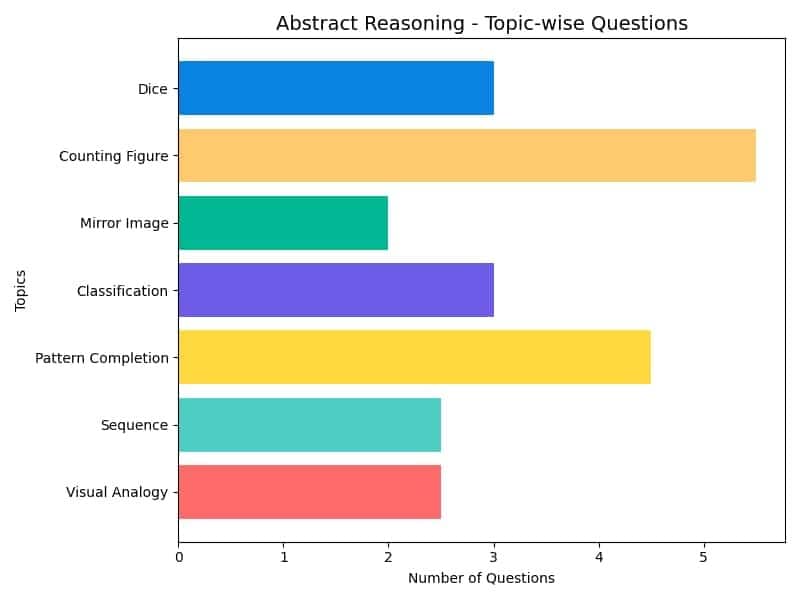
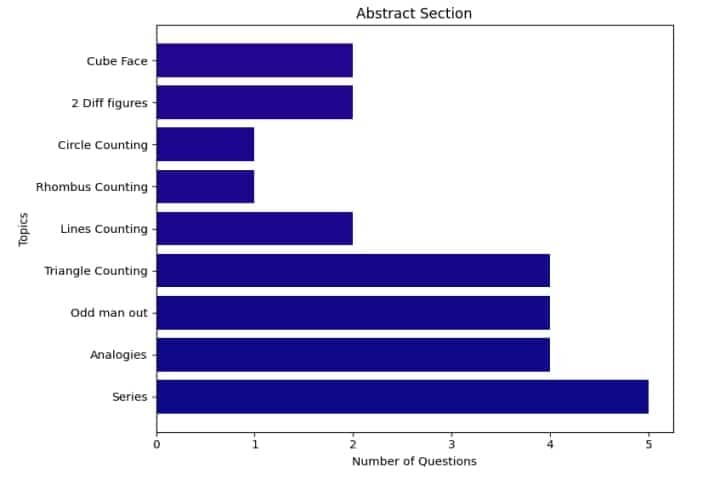
Abstract Reasoning was easy and scoring, largely driven by figure counting, pattern finding, and odd one out items, so observation power really mattered there
Day 3 of MAH MBA CET 2026, was easy to moderate in nature, but with a long paper, you needed solid time management plus smart question selection skills
MAH MBA CET Exam Pattern 2026
Understanding the MAH MBA CET exam structure as well as the syllabus is essential for the students. All the MAH MBA CET aspirants must go through the exam pattern throughout their MAH MBA CET preparation. Going through the exam structure helps in solidifying their understanding. The official MAH MBA CET exam pattern released by the Maharashtra Cell is given below.
THE MAH MBA CET exam commenced on 06th April and the exam was held in two shifts, morning and afternoon. Go through the section below to know about the complete MAH MBA CET 06 April analysis.
MAH MBA CET Analysis 2026 Day 1 Slot 1
The overall paper was moderate in difficulty but lengthy, which made time management the biggest challenge for most candidates. Although the questions were mostly doable , some parts like LR and RC kept taking longer than expected, so the overall attempt got a impacted.
The Quant section had a heavy emphasis on arithmetic, which basically dragged the calculation time up. Logical Reasoning ended up having the highest count of questions, so it felt like the most dominant segment there. Meanwhile, the English section was comparatively easier and it did help balance the paper a little.
The overall structure stayed close to the earlier MAH MBA CET pattern , though this one was slightly more intensive. In the end, performance seemed to lean more on speed, precision, and question picking, rather than on actual difficulty level.
Quantitative Aptitude Analysis
In Quant, it was mostly number-crunching in nature, with Algebra and Geometry showing up only in a very limited way. Most questions were uncomplicated , but still they consumed time because the calculations had to be done carefully.
VARC was moderate in difficulty, with vocabulary being the easiest and most scoring part. Reading Comprehension had a significant weightage and was manageable in terms of difficulty.
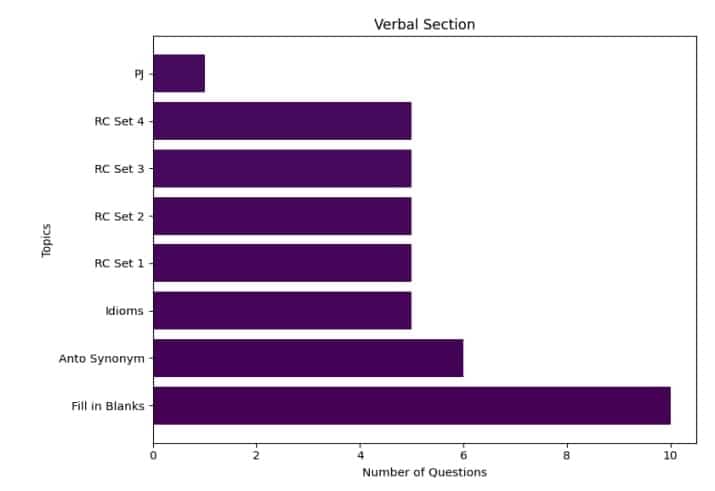
Topic-wise Question Distribution
Topic
Questions
Reading Comprehension (4 sets)
~20
Synonyms & Antonyms
6
Fill in the Blanks
10
Idioms
5
Grammar (Error Detection, Voice, etc.)
~10
Para Jumble
1
MAH MBA CET Analysis 2026 Day 1 Slot 2
The second slot followed a speed based pattern, where quick decision making mattered a lot, and yeah you had to stay sharp. The overall level of difficulty was easy to moderate, but at the same time the paper stayed lengthy, so that part felt a tiring.
Most questions were straight forward and concept based, with barely any real complexity. There were no big surprises, and the structure matched well with the recent mock trends. Candidates who concentrated on choosing the correct questions were able to attempt more, with better accuracy too.
The exam leaned more towards accuracy and a sort of strategy rather than just pure speed. The Reading Comprehension passages, plus LR singlet questions, added this extra time pressure, so the paper felt longer then it actually was , even when the difficulty level was not that extreme.
All in all, the paper comes across as lengthy, but still manageable for candidates who are well prepared.
VARC (Verbal Ability and Reading Comprehension)
In VARC, the emphasis was on grammar, which is scoring if your fundamentals are clear. Reading Comprehension carried a noticeable weight , and it basically demanded careful time distribution across the sets.
Topic-wise Question Distribution
Topic
Questions
Reading Comprehension (4 passages)
20
Grammar (Error Detection, Sentence Correction)
15–16
Vocabulary (Synonyms, Antonyms, Usage)
8–10
Out of the four RC passages, three were easy to moderate, while one was slightly difficult. Although the passages were easy to understand, they were lengthy, which increased the time required per question.
Grammar-based questions were straightforward and formed a major scoring area. Vocabulary questions were mostly direct.
This section followed the standard CET pattern and was one of the easiest parts of the paper.
Topic-wise Question Distribution
Topic
Questions
Counting Figures (Triangles, Squares, Rectangles)
Multiple
Odd One Out
Multiple
Missing Figure / Pattern
Multiple
Questions were direct and based on visual logic. Candidates with practice could attempt this section quickly.
Overall the difficulty level was easy.
Quantitative Aptitude (QA)
The difficulty level is easy to moderate but lengthy and was more calculation based.
Topic-wise Question Distribution
Topic
Questions
Data Interpretation (2 sets)
2
Arithmetic (TSD, P&L, Mixtures)
Major Share
Algebra
Significant Presence
Between the two DI sets , one felt easy , while the other was a tricky. The usual arithmetical stuff, like Time Speed and Distance, Profit and Loss, and Mixtures , showed up often. Also, there were a noticeable number of Algebra questions, it wasn’t only arithmetic, and that added a little weight. Most of the questions were solvable for sure, but the calculations kept stretching the time a little. So overall the section sat somewhere around easy to moderate, though keeping a good pace and time management was key.
MAH MBA CET Analysis 2026 Day 2 Slot 2
Over all, the paper stayed in that easy to moderate zone, not really going far beyond. The length, plus the sheer question volume , made it feel more challenging than you’d think at first. Also, the pace you kept and the decisions you made seemed to matter a lot more than any deep conceptual understanding. In VARC there were scoring moments you could grab, whereas LR and QA felt like they were asking for a bigger time investment, even if you knew the basics. Candidates who had solid practice tended to benefit from familiar question patterns, like they had seen the rhythm before. And yeah the sectional balance was a big factor in how many attempts ended up happening at the end.
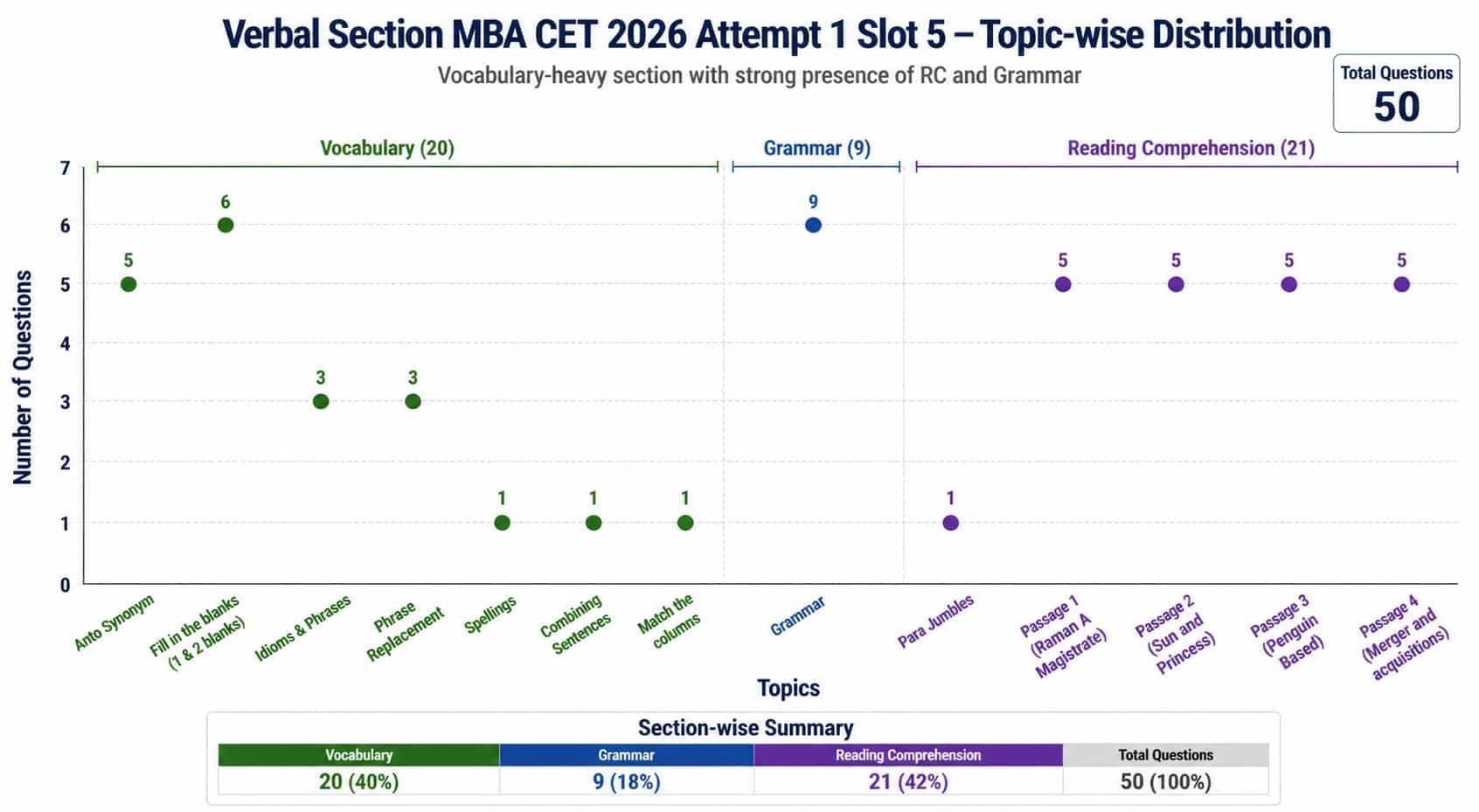
Verbal Ability & Reading Comprehension (VARC)
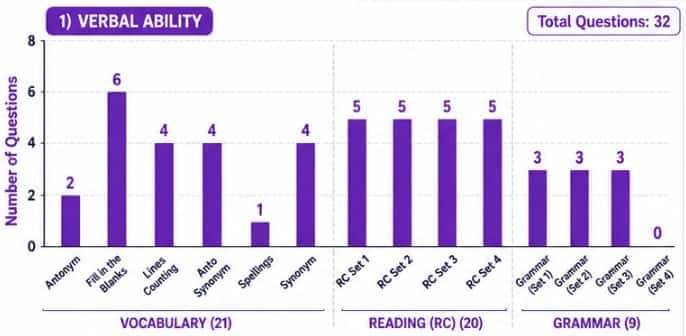
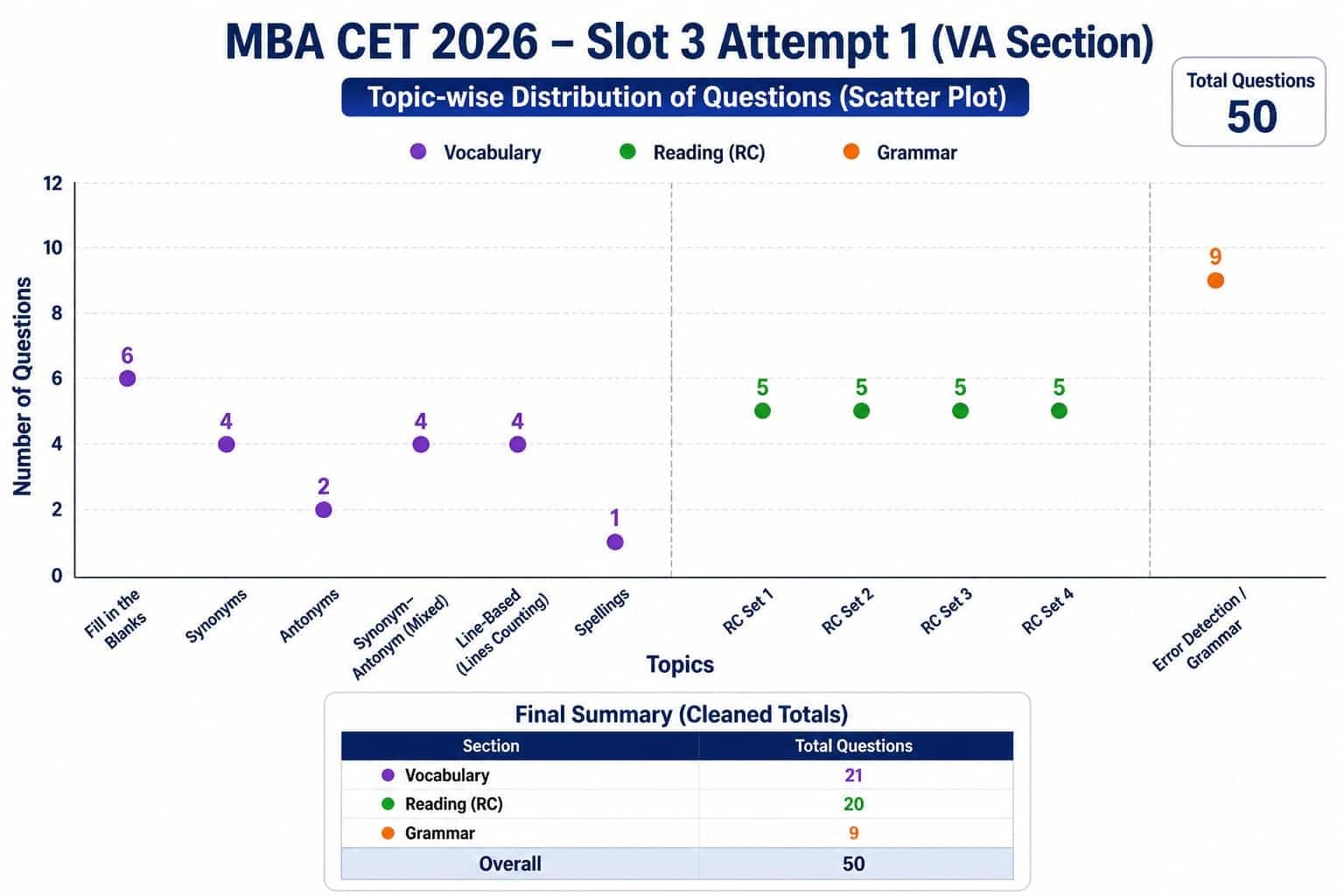
Reading Comprehension really formed the core of this part, and sort of drove the overall scoring. The passages themselves were straightforward, with most questions based on direct understanding, nothing too fancy. Vocabulary also showed up a lot, like fill in the blanks , plus synonyms , antonyms, and word usage in context . Then there were line based questions, which brought in a small analytical angle, but they stayed manageable. The grammar was more rule driven and predictable, so it felt familiar. Overall this section leaned more toward comprehension and vocabulary instead of complicated grammar.
Difficulty Level: Easy to Moderate. It can be highly scoring for candidates who have good reading speed, that alone helps a lot.
Strategy Insight: First, a quick grasp of the passages helped you make the most of the attempts. Second, strong vocabulary preparation improved your accuracy straight away. And try not to waste time on tiny doubts , because that time leak hurts efficiency.
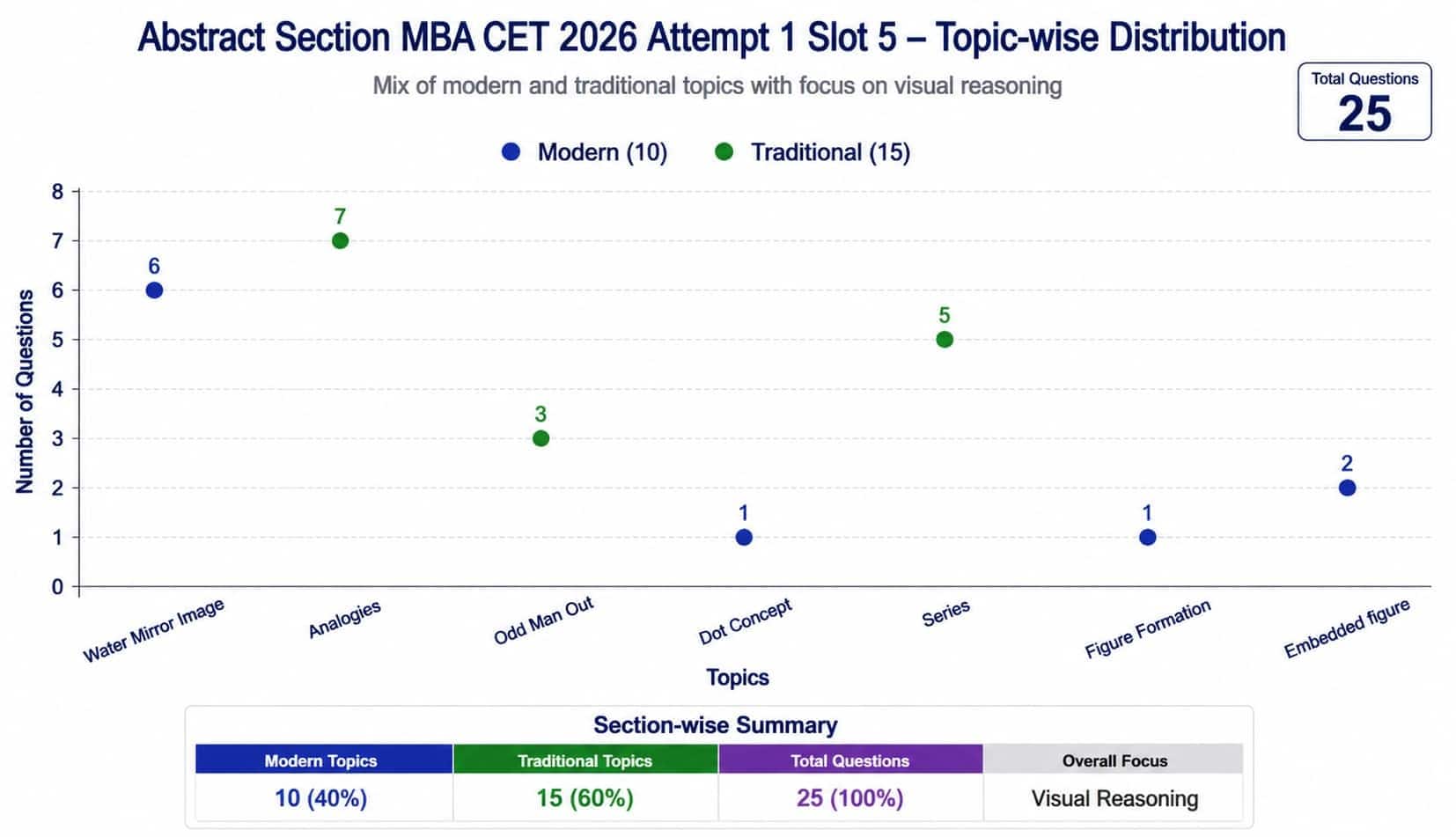
Abstract Reasoning (AR)
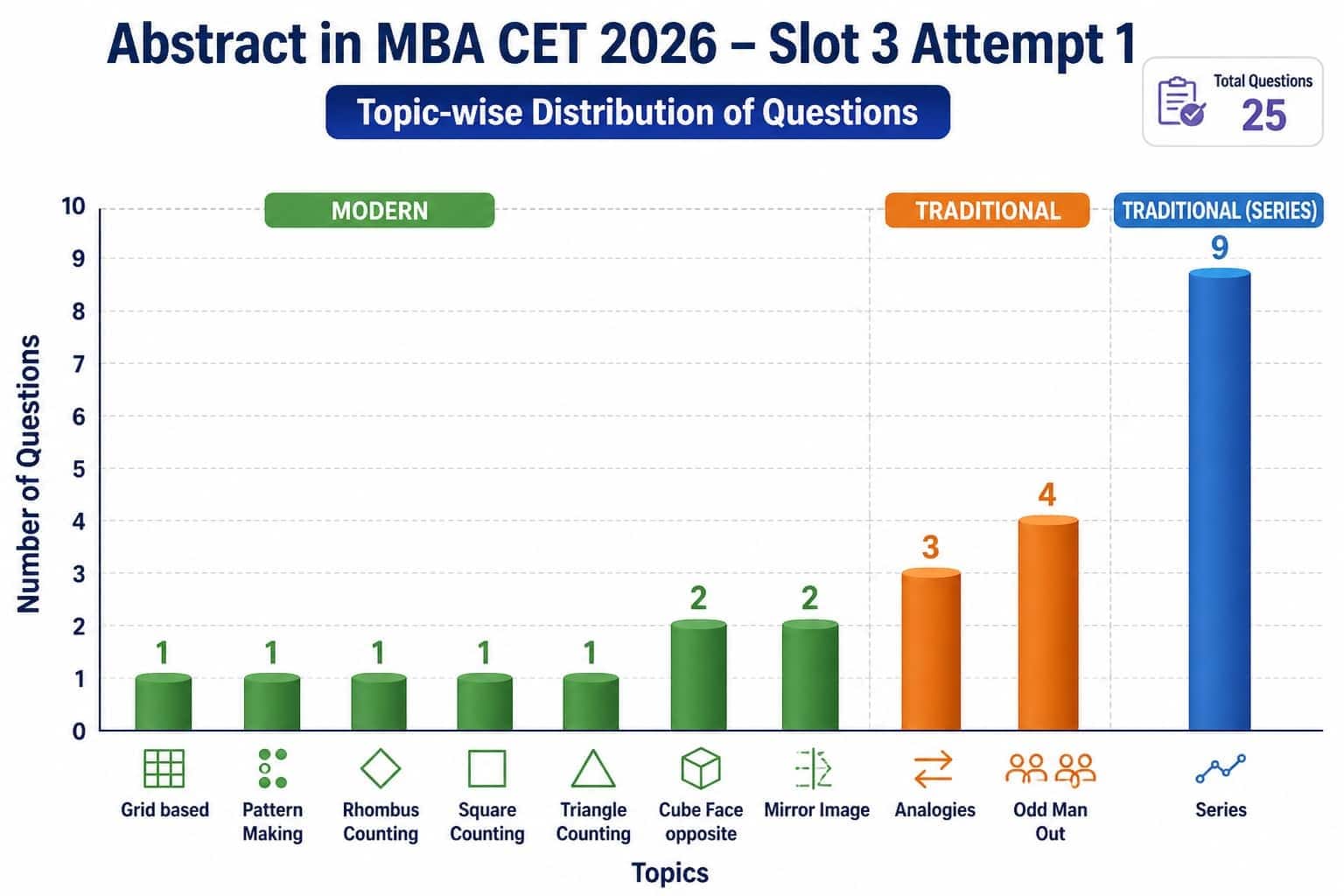
Key Observations: traditional reasoning things were clearly dominant, especially series and classification based questions, which stood out. Odd one out , and analogy type questions, were also showing up fairly often and they seemed to follow the usual standard patterns. Meanwhile modern reasoning topics like cube and mirror questions were limited. Pattern and counting questions were there too, though they did not really take over the section. Overall most questions leaned on familiar logic frameworks rather than some genuinely new concepts or angles.
Difficulty Level
Easy to Moderate, with a slight variation. The visual based questions made it feel a different at times, so yeah.
Strategy Insight
Candidates who had strong practice with pattern recognition could solve this section rather quickly. Because the logic patterns were repetitive, the whole thing felt predictable after a while. Also speed and accuracy were easier to keep steady when compared to LR.
Logical Reasoning (LR)
Key Observations
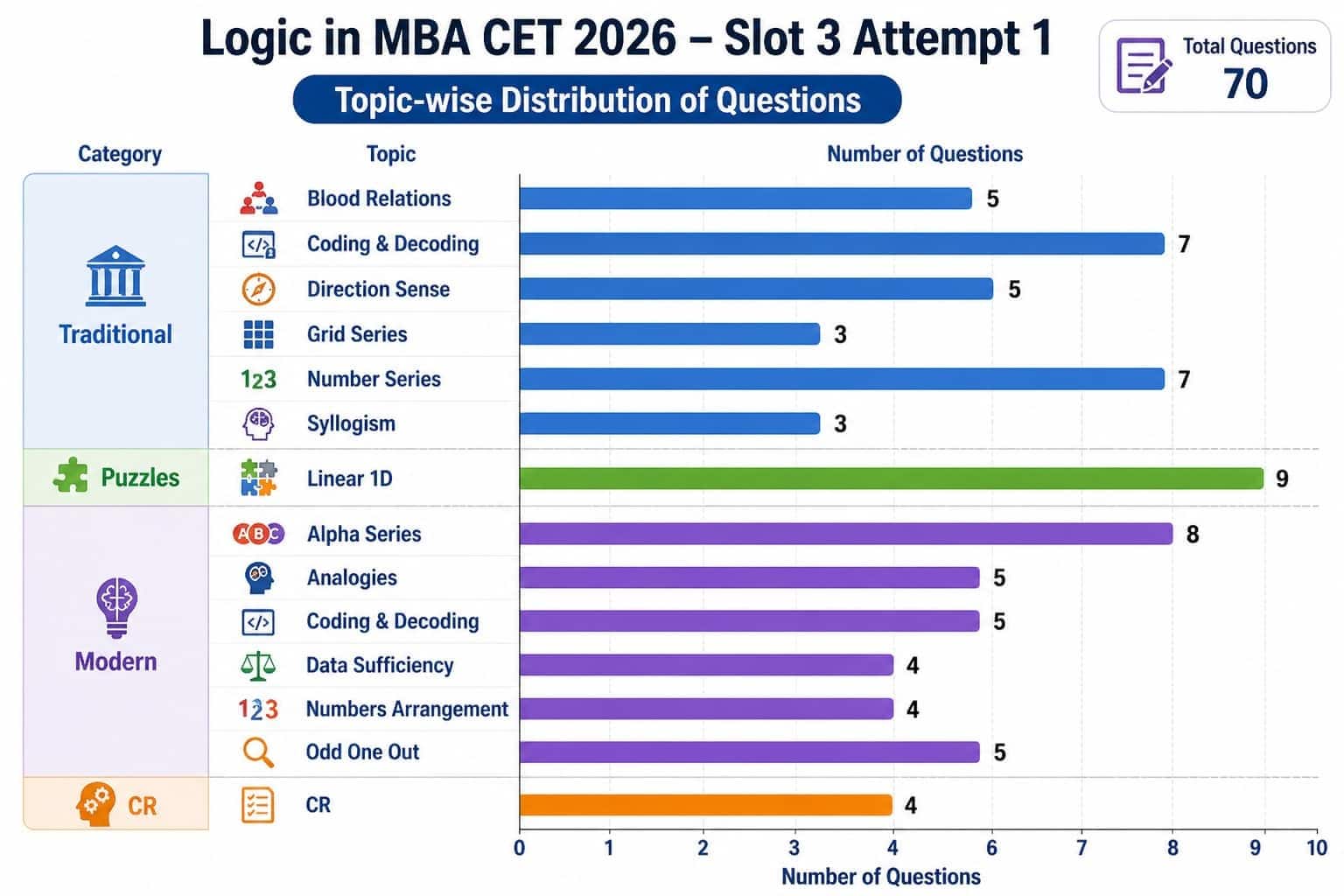
This section felt like it mixed a few different topic types together, so it was diverse but also sort of time intensive like, you know, a lot of steps in practice
You had puzzles, coding-decoding, series , blood relations, directions, and data sufficiency in the mix
The linear arrangement style questions made you re-read things a couple times, because interpretation mattered more than usual
Then the data sufficiency part added this extra reasoning layer, which slowed some attempts down, not dramatically but enough
Most questions seemed stand alone, rather than being clumped into huge puzzle sets, which was better in one sense
Difficulty Level
Moderate
Time-consuming because the reasoning often came in multiple steps
Strategy Insight
The main thing was basically pacing yourself across the different question types
Starting with the easier questions early made momentum easier to keep
Also, skipping or avoiding the really long or confusing problems helped overall attempts, even if it looked a risky at first
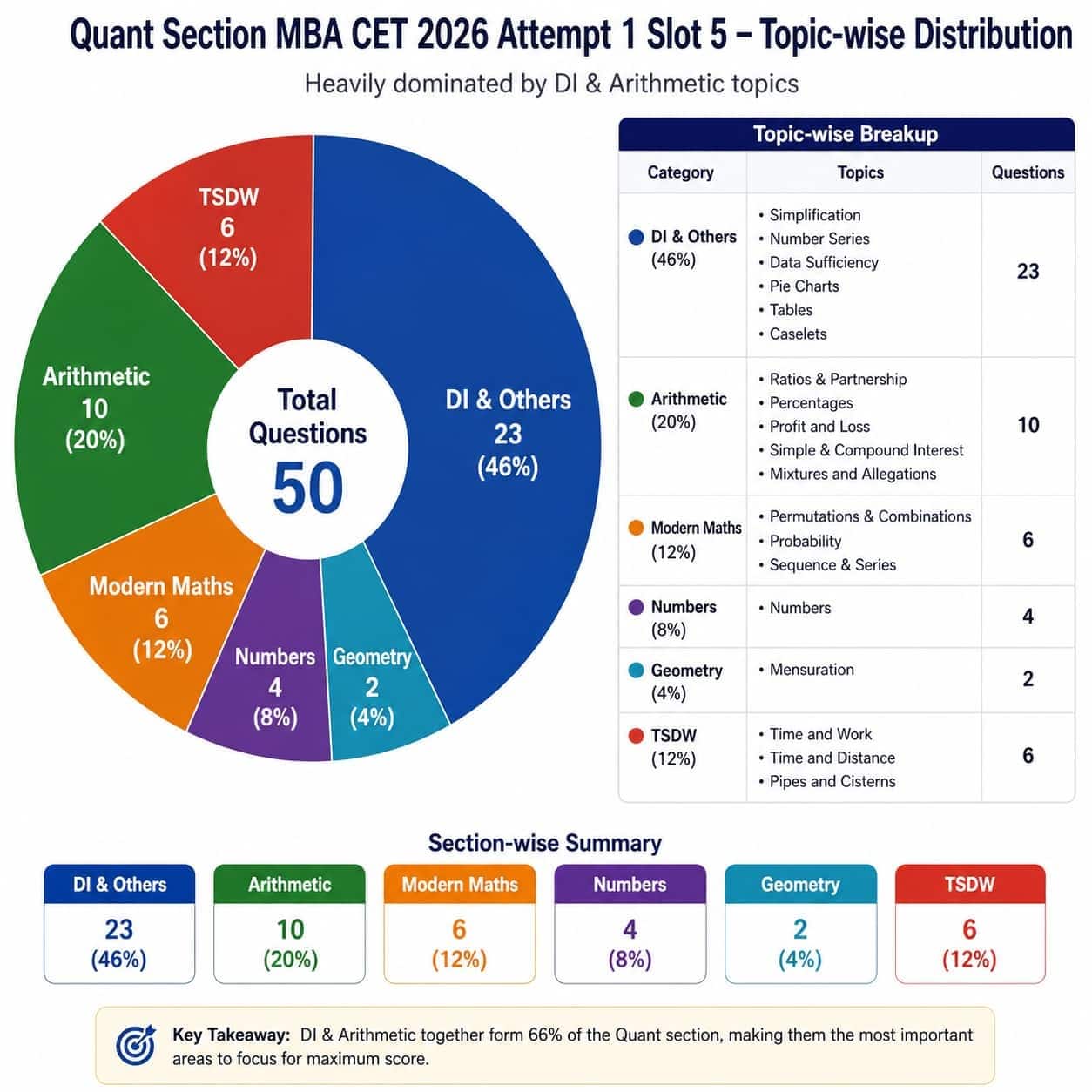
Quantitative Aptitude (QA)
Key Observations
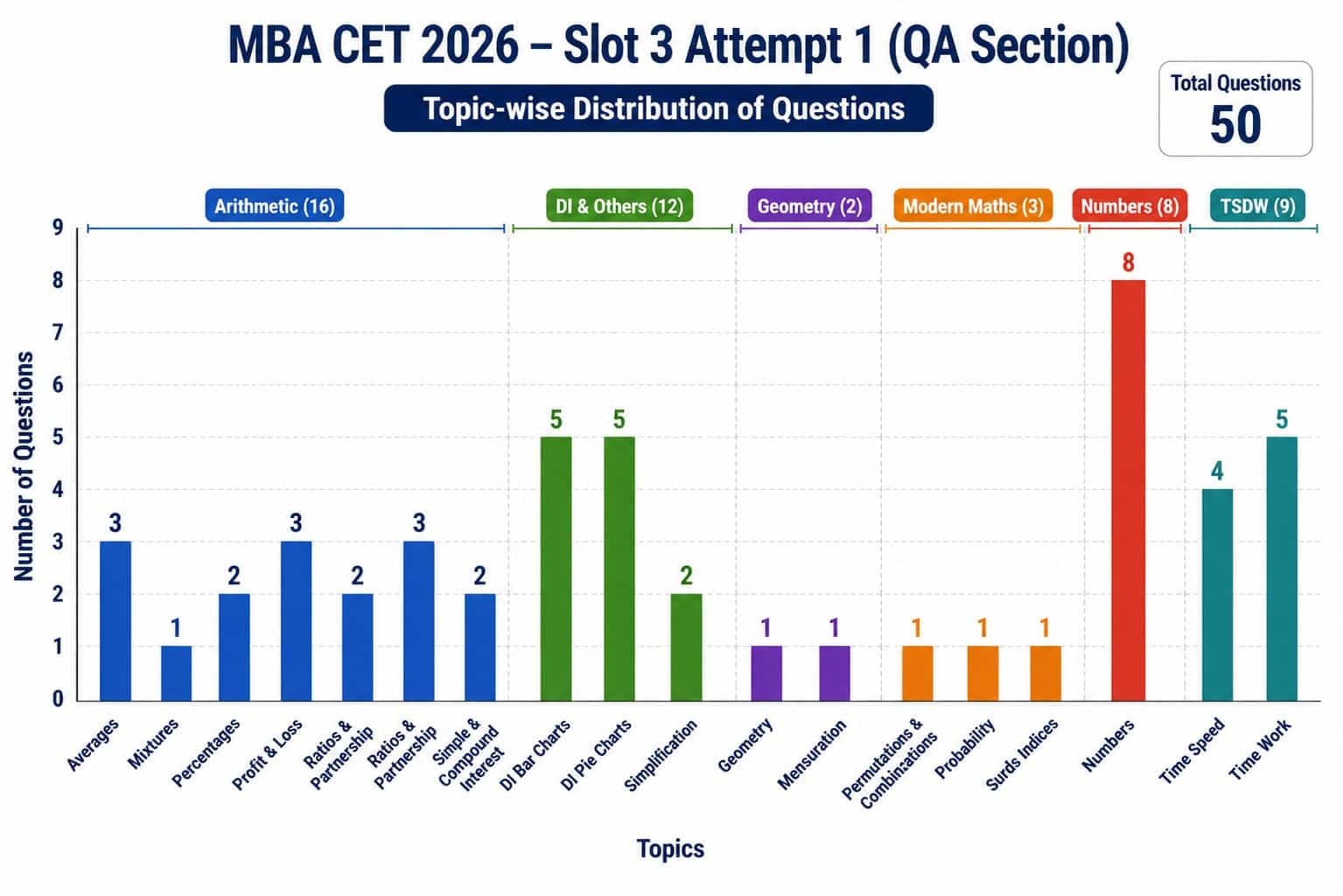
Arithmetic remained the backbone of the section, consistent with recent CET trends
Topics like percentages, profit and loss, ratios, and time-based problems were prominent
Data Interpretation required careful calculation and was time-intensive
Numbers-based questions had noticeable presence
Geometry and modern maths appeared but did not significantly influence the section
The section focused more on calculations than conceptual difficulty
Great Lakes - PGDM & PGPM Admissions 2027
Globally Recognized by AACSB (US) & AMBA (UK) | 18 LPA Avg. CTC for PGPM 2026
Test centres are available in 70+ cities across India | 75,000+ aspirants apply for the NMAT exam | Accepted by 58+ institutions like NMIMS, KJSIM, ISB, SPJIMR and Great Lakes.
Boost your MBA admission chances with the MAH CET MBA College Predictor. Get a personalized list of colleges based on your percentile and expected cutoff trends.
The paper was manageable but lengthy, making time management critical
VARC provided the best opportunity to score quickly
LR and QA were the most time-consuming sections
Abstract reasoning remained predictable and relatively easier
Data sufficiency and calculation-heavy questions increased complexity in later sections
A well-balanced approach across sections was necessary to maximize attempts
MAH MBA CET Analysis 2026 for Day 3
MAH MBA CET Analysis 2026 Day 3 Slot 1
Overall Exam Analysis
The paper was overall easy to moderate in difficulty and could be handled well by most candidates. Despite the easier level, the exam felt lengthy, making time management an important factor.
Logical Reasoning Analysis
The pattern continued to be consistent with earlier shifts.
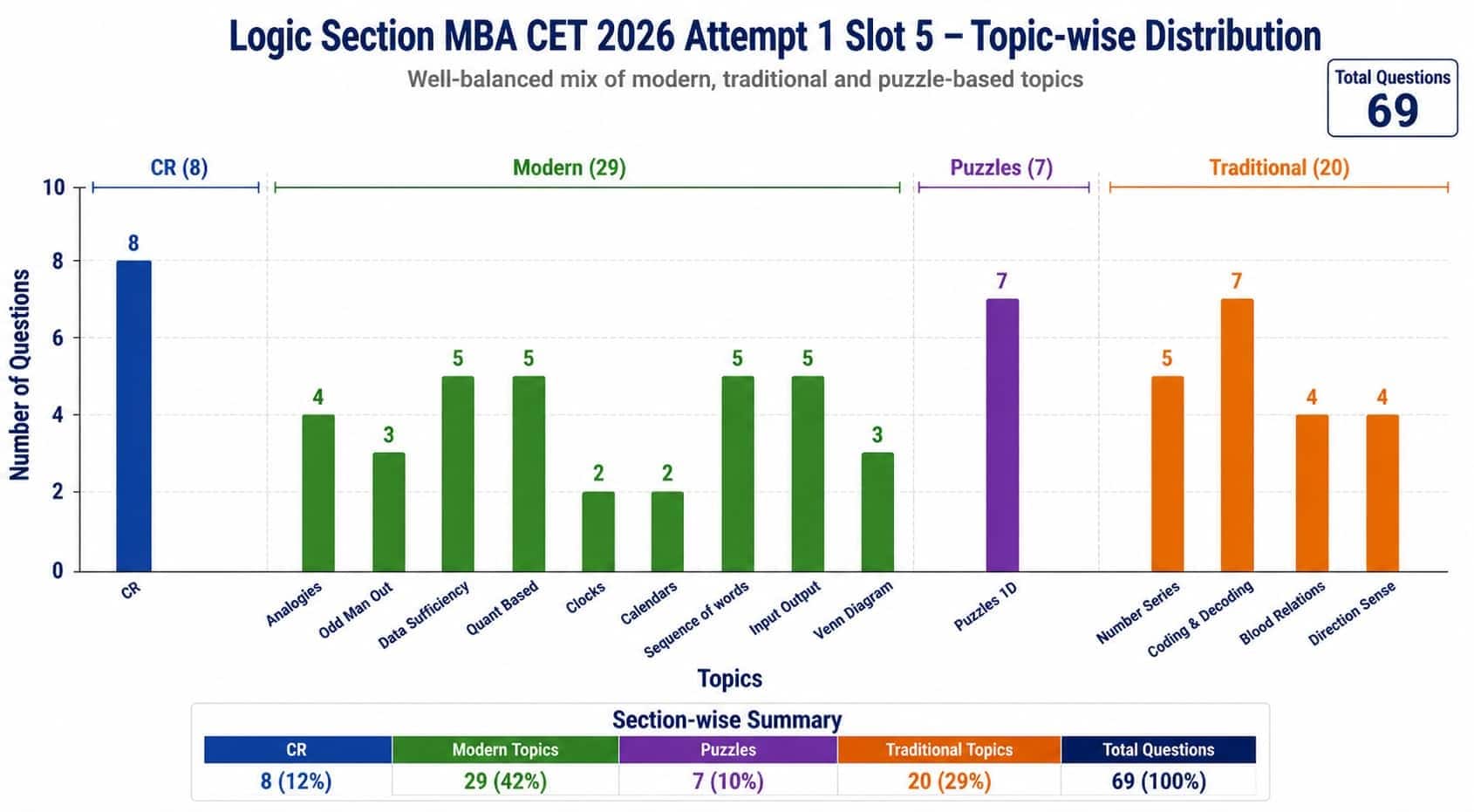
Around 5 questions were based on Input-Output, which were moderate in nature
Questions were asked from number series, divisibility, and calendar topics
Critical reasoning and data sufficiency were also included
A DI-based set was present within the LR section
Some questions were based on permutation and combination concepts
Although doable, the section demanded careful time allocation and selection
Abstract Reasoning Analysis
This section was simple and easy to navigate, making it one of the most scoring parts of the paper.Questions included mirror-images, rotation , and pattern based problems. Most of the items were straight forward, so it was more observation really. I didn’t see any truly complex or sneaky patterns reported anywhere, so overall it felt manageable. Candidates could probably fly through this part fast, with decent accuracy, .
Quantitative Aptitude Analysis
The Quant part was moderate, and it followed that familiar vibe, from the earlier shifts . Arithmetic stayed the main focus at every turn. We also had one DI set, in here, which was structured like the prior shifts but, you know, different values altogether. A few questions seemed to mirror patterns we’ve already seen in previous year papers. Overall it was manageable, but there were still calculations to push through so it got a time consuming.
The VARC section was easy to moderate and less time-consuming maybe, overall. 4 RC passages were asked, and they made up around 20 questions or so . The vocabulary questions were around 5–6 in number. Most of the questions felt direct and easy to figure out, there weren’t too many traps, which helped.
Key highlights: the paper was easy to moderate but also lengthy, you know. Logical Reasoning took more time even though the concepts were easy. Abstract Reasoning was straightforward and scoring was decent there. Quant was moderate with a familiar pattern, so it didnt feel too different. VARC remained manageable and less time-consuming compared to other parts. Also, question selection mattered a lot, like choosing in the right order . The presence of previous year pattern based questions gave extra familiarity, so it felt smoother while attempting.
MAH MBA CET Analysis 2026 Day 3 Slot 2
The Shift 2 paper on 8th April stayed in line with what we saw earlier in the previous slots, so it felt familiar in a way. The questions level was easy to moderate overall , but the whole paper seemed on the longer side , which made it hard to go for every single question. The main task was not only solving but also managing time properly , and still keeping accuracy in check .
Verbal Ability & Reading Comprehension (VARC)
This section was mostly carried by Reading Comprehension
The passages were straightforward , yet they still took time to read and digest
Vocabulary questions showed up in a few different styles and were mostly direct
Grammar parts were simple, more rule driven than tricky
Overall, this section had solid scoring potential if time was handled well
Logical Reasoning (LR)
A blend of reasoning topics came up, including both usual types and more analytical angles
The questions were not extremely hard, but careful reading mattered a lot
Time per question stayed a higher because some problems needed multiple steps
Here it was more about calm focus and logical neatness than sheer speed
Abstract Reasoning (AR)
This part matched the usual CET pattern you would expect
Questions were based on visual patterns, series, and figure identification
Most could be attempted quickly with basic observation skills
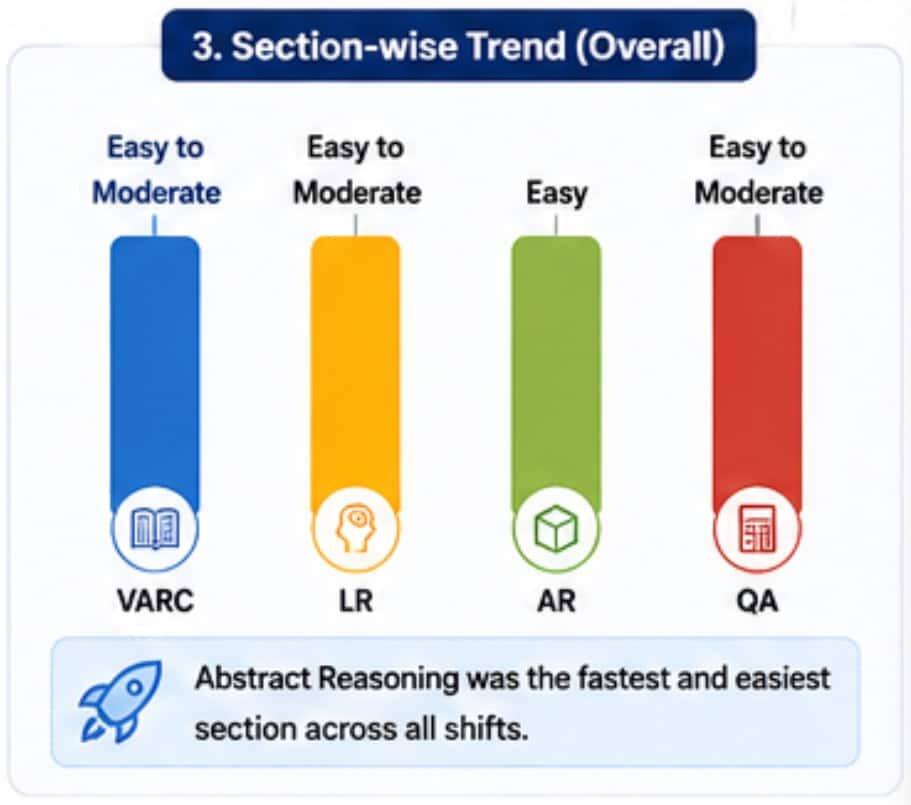
So yeah, it remained the fastest and also the most scoring section
Quantitative Aptitude (QA)
Arithmetic kept leading the show in this section
Data Interpretation demanded calculations and that definitely ate some time
The questions sounded easy at first, but execution needed effort
Choosing the right questions in the right order was important, for saving time
Key Takeaways
The paper felt manageable, but the length was a noticeable factor
Time management became a deciding element for overall performance
VARC and AR helped in getting early attempts going
LR and QA needed more careful handling because time was tight
A selective, balanced approach was necessary if you wanted a good score
Comparison of Day 1 vs Day 2 vs Day 3
Day & Shift
Overall Difficulty
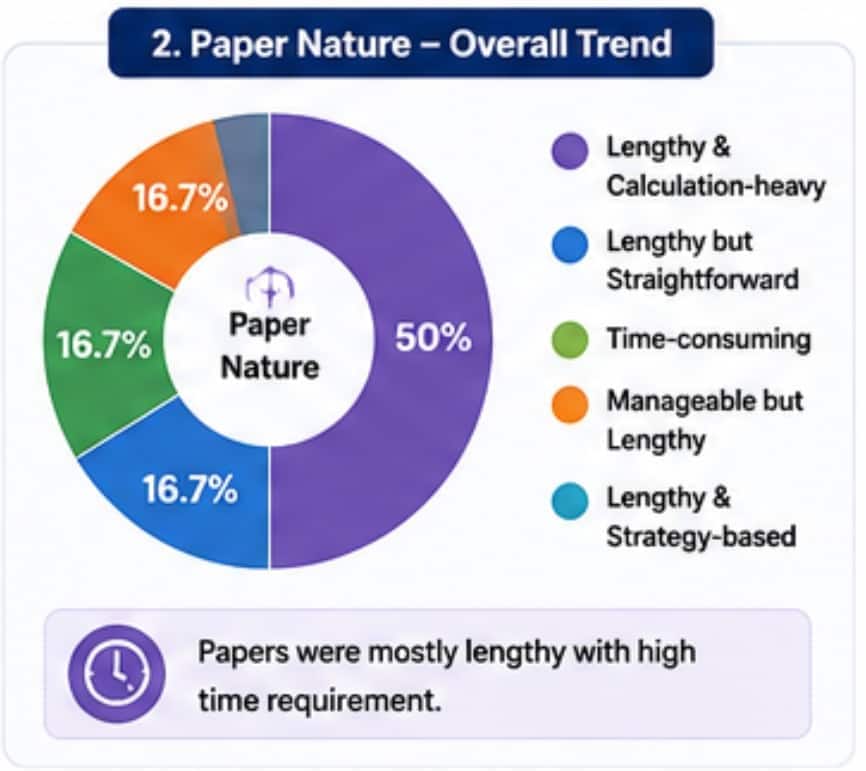
Paper Nature
VARC
Logical Reasoning
Abstract Reasoning
Quantitative Aptitude
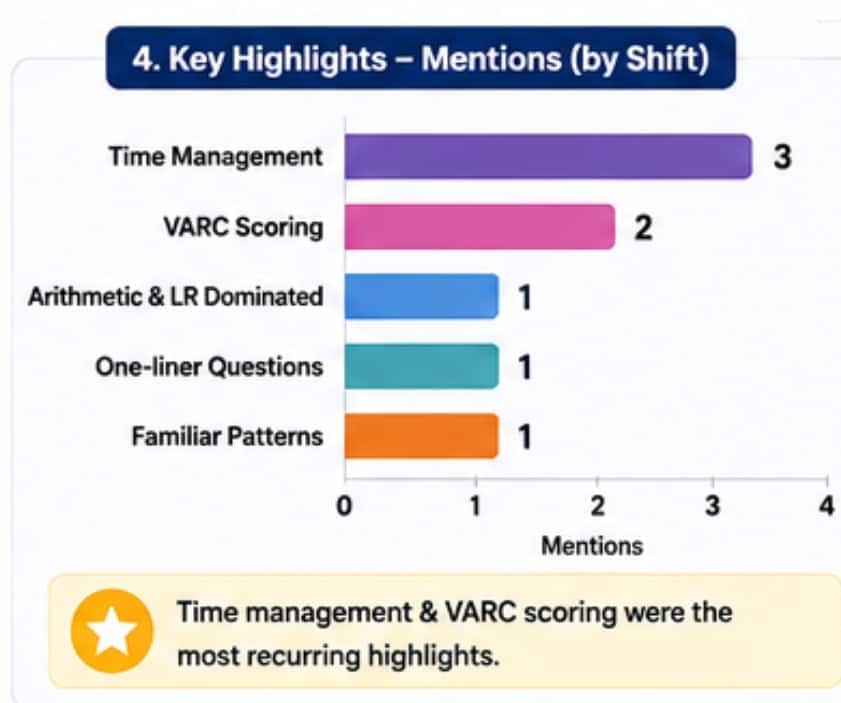
Key Highlights
6 April Shift 1
Moderate
Lengthy & calculation-heavy
Easy to Moderate
Moderate & lengthy
Easy to Moderate
Moderate
Arithmetic and LR dominated; vocabulary questions were scoring
6 April Shift 2
Easy to Moderate
Lengthy but straightforward
Easy to Moderate
Easy to Moderate
Easy to Moderate
Easy to Moderate
Direct one-liner questions; minimal puzzle dependency
7 April Shift 1
Easy to Moderate
Time-consuming
Easy to Moderate
Easy to Moderate
Easy
Easy to Moderate
RC passages and singlet LR questions increased time pressure
7 April Shift 2
Easy to Moderate
Manageable but lengthy
Easy to Moderate
Moderate
Easy to Moderate
Easy to Moderate
VARC was scoring; LR and QA required more time investment
8 April Shift 1
Easy to Moderate
Lengthy & strategy-based
Easy to Moderate
Easy to Moderate
Easy
Easy to Moderate
Familiar question patterns; AR remained quickest section
8 April Shift 2
Easy to Moderate
Lengthy but manageable
Easy to Moderate
Easy to Moderate
Easy
Easy to Moderate
Time management remained the deciding factor across sections
Overall Trend (6–8 April)
Easy to Moderate
High time pressure across all slots
Most scoring section in majority shifts
Lengthy and diverse
Fastest and easiest section
Calculation-heavy and time-consuming
Smart selection, speed, and accuracy mattered more than conceptual difficulty
MAH MBA CET Mock Test 2026 for Careers360
The MAH MBA CET Mock Test 2026 by Careers360 is made to help people get used to the actual exam style, the difficulty level, and the time handling that is required for the test. These practice sets cover every section, like Logical Reasoning Abstract Reasoning, Quantitative Aptitude, and also Verbal Ability. The candidates can identify their strengths and weaknesses by attempting the MAH MBA CET mock test 2026.
Candidates who are preparing for the MAH MBA CET exam phase 2 must adhere to the right exam-related resources for effective preparation. These resources include eBooks, mock tests, previous year question papers, and section-wise practice materials that help in understanding the exam pattern and building strong conceptual clarity across all sections.
MAH MBA CET Exam Analysis 2026 (06, 07 and 08 April)
Q: What was the overall difficulty level of the MAH MBA CET 2026?
A:
The overall difficulty level of the MAH MBA CET 2026 was easy to moderate across most shifts. However, the paper was lengthy, making time management a key factor for candidates.
Q: Which section was the most difficult in the MAH MBA CET 2026?
A:
Logical Reasoning was considered the most challenging due to its high number of questions and time-consuming nature, while Quantitative Aptitude required strong calculation speed.
Q: Which section was the easiest in the MAH MBA CET 2026?
A:
Verbal Ability and Reading Comprehension were the easiest sections, with direct vocabulary and grammar-based questions that were relatively simple to attempt.
Q: How many good attempts are considered safe in the MAH MBA CET 2026?
A:
A good attempt range for MAH MBA CET 2026 is estimated to be between 127–142 questions, depending on the shift and difficulty level.
Q: How can MAH MBA CET 2026 analysis help candidates?
A:
The exam analysis helps candidates understand section-wise trends, difficulty levels, and question patterns, enabling them to evaluate their performance and prepare better for future attempts.
The MHA MBA CET is available on our official website. The MBA CET 2025 exam for MBA admission takes place on April 1, 2 and 3, 2025. Candidates check the previous year's questions using the previous year's question paper and understand the structure of the exam pattern. Using the
With a 91.16 percentile in MAH MBA CET 2025, you have a good chance of securing admission in decent MBA colleges in Maharashtra. While top institutes like JBIMS or Sydenham may be out of reach, colleges such as PUMBA, SIES, Chetana’s, MET, and DY Patil are realistic options. Among these,
With 91.16 percentile, you can target top-tier MBA colleges like PUMBA (Pune University), MET Mumbai, SIESCOMS Navi Mumbai, and NL Dalmia. Welingkar and K J Somaiya may be slightly out of reach but possible under lower cutoffs or spot round.
With 42 percentile in MAH MBA CET, it is very difficult to get admission in good or top MBA colleges through CAP rounds. Most of the well-known colleges in Maharashtra like JBIMS, SIMSREE, Welingkar, and PUMBA usually take students who score more than 90 or 99 percentile. Even average colleges
Test centres are available in 70+ cities across India | 75,000+ aspirants apply for the NMAT exam | Accepted by 58+ institutions like NMIMS, KJSIM, ISB, SPJIMR and Great Lakes.
A career as Marketing Director is also known as a marketing expert who is responsible for the overall marketing aspect of the company. He or she oversees plans and develops the company's budget. The marketing Director collaborates with the business team to plan and develop the marketing and branding strategies for the company's products or services.
A Business Development Executive identifies and pursues new business opportunities to drive company growth. They generate leads, build client relationships, develop sales strategies, and analyse market trends. Collaborating with internal teams, they aim to meet sales targets. With experience, they can advance to managerial roles, playing a key role in expanding the company’s market presence and revenue.
Content Marketing Specialists are also known as Content Specialists. They are responsible for crafting content, editing and developing it to meet the requirements of digital marketing campaigns. To ensure that the material created is consistent with the overall aims of a digital marketing campaign, content marketing specialists work closely with SEO and digital marketing professionals.
A Sales Manager leads a sales team to meet targets, formulates strategies, analyses performance, and monitors market trends. They typically hold a degree in management or related fields, with an MBA offering added value. The role often demands over 40 hours a week. Strong leadership, planning, and analytical skills are essential for success in this career.
A marketing manager is a person who oversees a company or product marketing. He or she can be in charge of multiple programmes or goods or can be in charge of one product. He or she is enthusiastic, organised, and very diligent in meeting financial constraints. He or she works with other team members to produce advertising campaigns and decides if a new product or service is marketable.
A Marketing manager plans and executes marketing initiatives to create demand for goods and services and increase consumer awareness of them. A marketing manager prevents unauthorised statements and informs the public that the business is doing everything to investigate and fix the line of products. Students can pursue an MBA in Marketing Management courses to become marketing managers.
An SEO Analyst is a web professional who is proficient in the implementation of SEO strategies to target more keywords to improve the reach of the content on search engines. He or she provides support to acquire the goals and success of the client’s campaigns.
Digital marketing is growing, diverse, and is covering a wide variety of career paths. Each job function aids in the development of effective digital marketing strategies and techniques. The aims and objectives of the individuals who opt for a career as a digital marketing executive are similar to those of a marketing professional: to build brand awareness, promote company services or products, and increase conversions. Individuals who opt for a career as Digital Marketing Executives, unlike traditional marketing companies, communicate effectively through suitable technology platforms.
Individuals who opt for a career as a business analyst look at how a company operates. He or she conducts research and analyses data to improve his or her knowledge about the company. This is required so that an individual can suggest the company strategies for improving their operations and processes.
In a business analyst job role a lot of analysis is done, things are learned from past mistakes and the successful strategies are enhanced further. A business analyst goes through real-world data in order to provide the most feasible solutions to an organisation. Students can pursue Business Analytics to become Business Analysts.
2 Jobs Available
Never miss MAH MBA CET update
Get timely MAH MBA CET updates directly to your inbox. Stay informed!



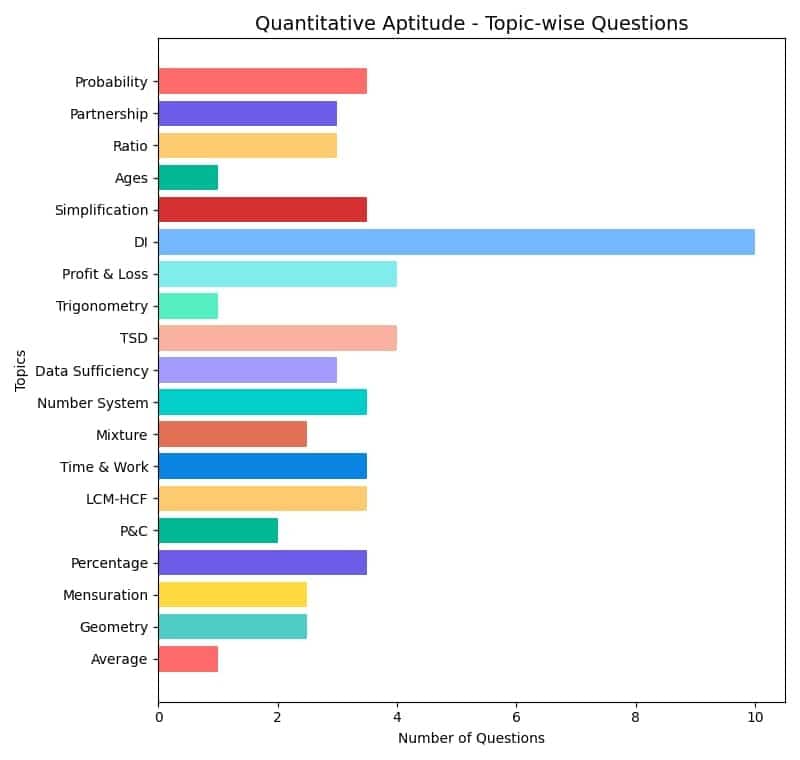
 Quantitative Aptitude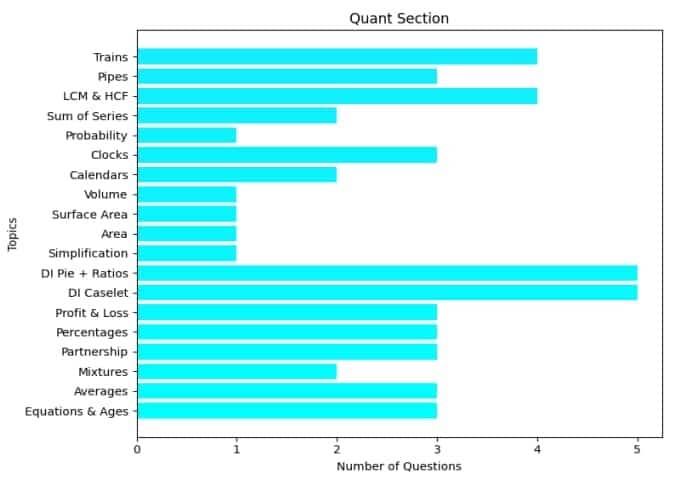
 Logical Reasoning (LR)