Great Lakes - PGDM & PGPM Admissions 2027
Globally Recognized by AACSB (US) & AMBA (UK) | 18 LPA Avg. CTC for PGPM 2026


The CMAT 2026 examination was successfully conducted on 25th January, and candidates who appeared for the test are now eager to analyze their performance and understand the overall paper pattern. With the exam concluded, the focus has shifted to reviewing authentic questions and evaluating the level of difficulty, question distribution, and important topics asked in the paper. This is the best time for aspirants to go through reliable CMAT 2026 memory-based content to get a clear idea of how the exam was structured and what kind of questions were actually asked. In this article, you will find the CMAT 2026 question paper with solutions soon, in the meantime, you can check the detailed memory-based questions and answers, along with useful insights into the CMAT 2026 exam, including section-wise analysis, difficulty level, and important takeaways for future preparation.
This Story also Contains
Download Now: CMAT 2026 Memory Based Questions and Analysis
Read on to know about the CMAT 2026 exam pattern in the table below.
Particulars | CMAT 2026 Exam Pattern |
CMAT 2026 Exam Date | January 25, 2026 |
CMAT Exam Duration | 3 Hours (180 Minutes) |
Mode of Examination | Computer-Based Test (CBT) |
Exam Timing | 9:00 AM – 12:00 PM |
Total Questions | 100 Objective Questions |
Total Marks | 400 Marks |
Marking Scheme | +4 for each correct answer –1 for each incorrect answer 0 for unattempted questions |
Number of Sections | 5 Sections |
Sections & Questions | Language Comprehension: 20 questions Quantitative Techniques & Data Interpretation: 20 questions Logical Reasoning: 20 questions General Awareness: 20 questions Innovation & Entrepreneurship: 20 questions |
You can use CMAT Percentile Predictor 2026
The CMAT 2026 exam was conducted on 25 January, 2026. As per student’s feedback, the difficulty level of the exam was of an easy to moderate level. Read below to get a complete breakdown of exam analysis for the CMAT exam 2026.
Overall Paper Analysis – CMAT 2026
Difficulty level was moderate.
Paper was at par with or slightly tougher than last year.
Mostly doable and well-balanced, focusing more on speed and accuracy than deep concepts.
Strong sections: Quant (Arithmetic-based), LR, Innovation & Entrepreneurship.
Moderate challenge: English due to unpredictability.
Most unpredictable: GK.
Overall, CMAT 2026 rewarded solid basics, speed, and smart time management.
Quantitative Aptitude (Quant)
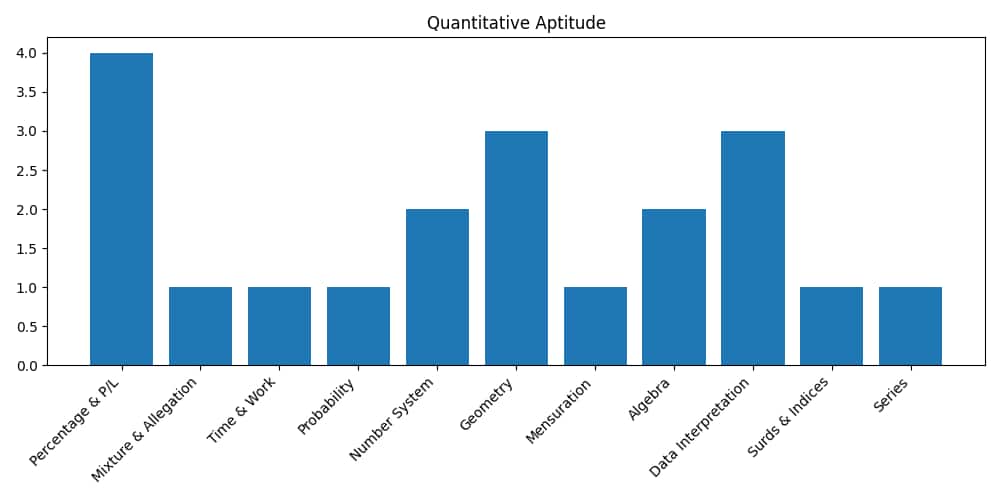
Easy to moderate in difficulty.
Arithmetic dominated the section.
Major topics: Percentage, Profit & Loss, Time & Work, Mixtures & Allegation.
Geometry mainly involved triangles and basic properties.
Mensuration included volume-based questions (like cylinders).
One simple Probability question (coin toss type).
Number System and Simplification had series-based and nested root questions.
Algebra had very limited presence.
Data Interpretation appeared as a small, straightforward set.
SI/CI and Quadratic Equations were negligible or absent.
Globally Recognized by AACSB (US) & AMBA (UK) | 18 LPA Avg. CTC for PGPM 2026
Test centres are available in 70+ cities across India | 75,000+ aspirants apply for the NMAT exam | Accepted by 58+ institutions like NMIMS, KJSIM, ISB, SPJIMR and Great Lakes.
Logical Reasoning (LR)
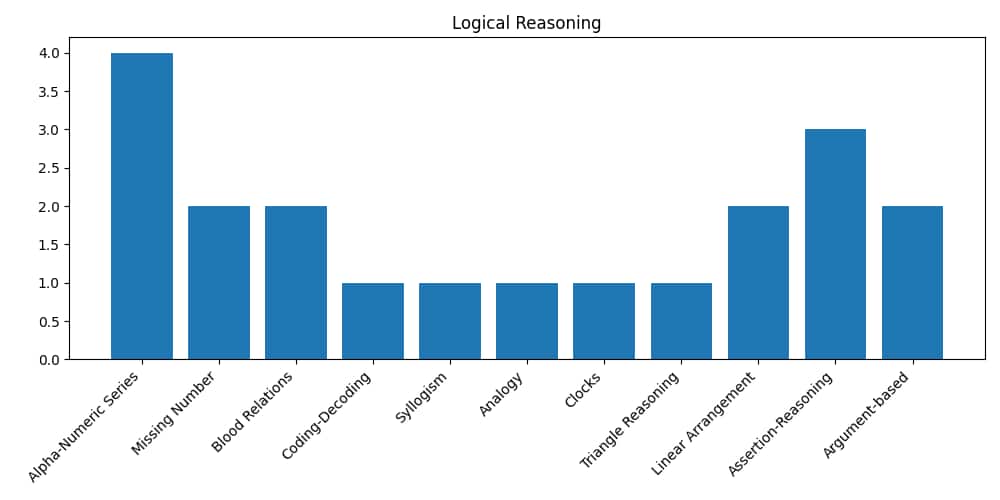
Easy to moderate and manageable.
No big puzzle sets; all questions were individual.
Included alpha-numeric series, missing numbers, blood relations, coding-decoding, syllogism, analogy, clocks, triangle-based logic.
Assertion–reasoning and argument-based questions were present.
Linear arrangement appeared in a very small and simple form.
English Language (Verbal Ability)
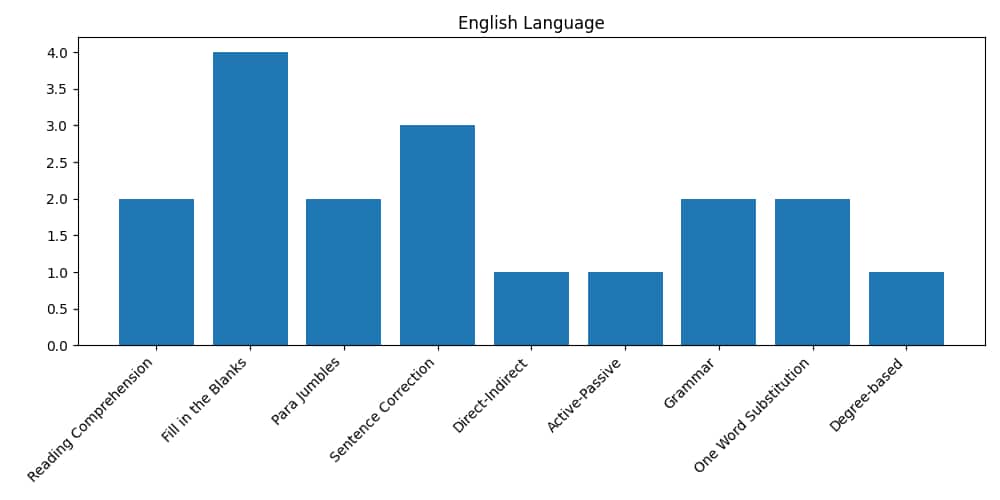
Slightly moderate to difficult and somewhat unpredictable.
Included Reading Comprehension, fill in the blanks, para jumbles, sentence correction, sentence structure questions.
Direct–Indirect Speech questions were lengthy.
Active–Passive Voice and grammar questions were present.
One-word substitutions were asked.
A new “degree-based” question type was noticed.
More focus on grammar and application rather than pure vocabulary.
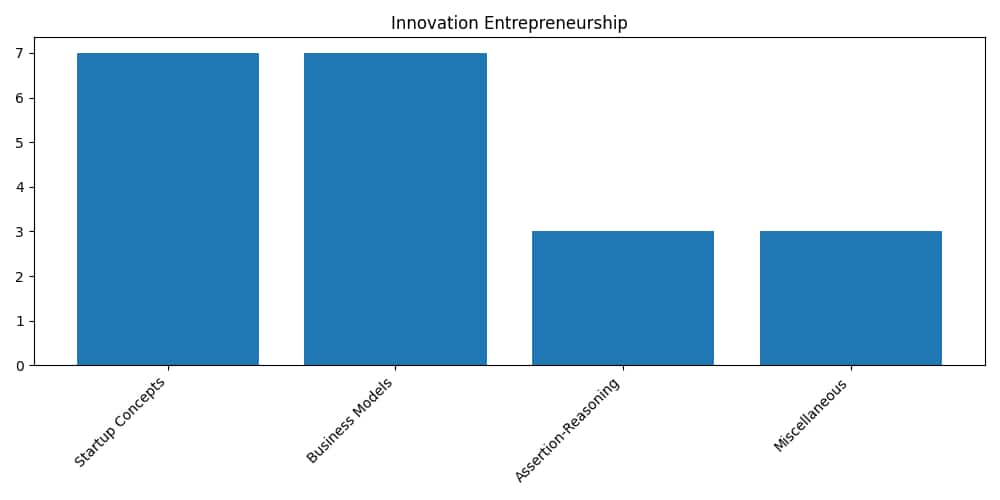
Innovation & Entrepreneurship
Easy and highly scoring section.
Questions were mostly direct and conceptual.
Included startup terminology, business models, and assertion–reasoning.
Content matched well with mocks and workshops.
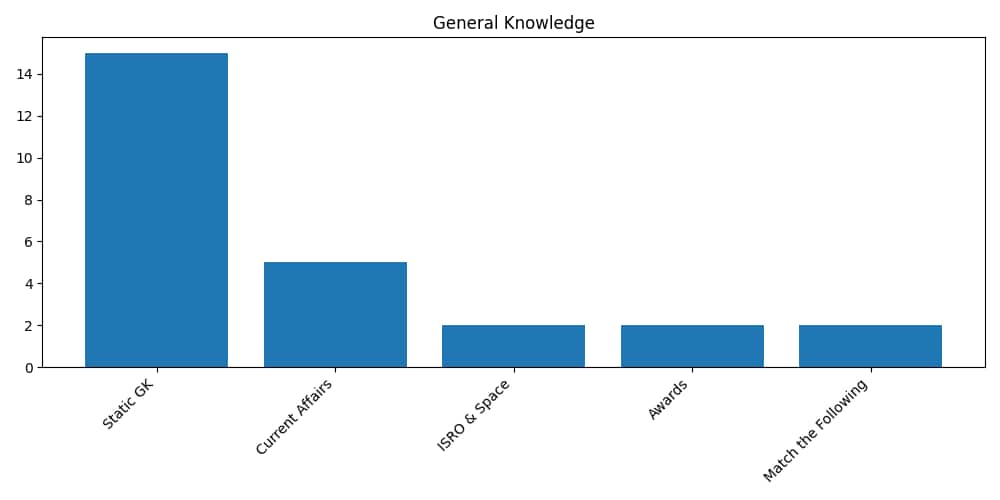
General Knowledge (GK)
Most uncertain and subjective section.
Dominated by Static GK.
Limited Current Affairs.
Topics included ISRO, Padma Vibhushan, and match-the-following type questions.
Performance depended strongly on individual preparation.
Check detailed, CMAT 2026 Exam Analysis Here
You can use CMAT Percentile Predictor 2026
We have provided below the memory based questions along with their solutions of CMAT 2026:
QUANTITATIVE TECHNIQUES & DATA INTERPRETATION
Question 1: Find the unit digit of $234^{100}+234^{101}$.
Solution:
Last digit of $234$ is $4$. Powers of $4$ cycle every 2: $4,6,4,6,\dots$
Since $100$ is even, unit digit of $234^{100}$ is $6$.
Since $101$ is odd, unit digit of $234^{101}$ is $4$.
So sum’s unit digit = $6+4=10$, which ends in $0$.
Answer: $0$
Question 2: If $A+\dfrac{1}{B+\dfrac{1}{C-9}}=\dfrac{29}{5}$, find $A+B+C$.
Solution:
$\dfrac{29}{5}=5+\dfrac{4}{5}$, so $A=5$.
$\dfrac{1}{B+\dfrac{1}{C-9}}=\dfrac{4}{5}$ → $B+\dfrac{1}{C-9}=\dfrac{5}{4}=1+\dfrac{1}{4}$ → $B=1$, $\dfrac{1}{C-9}=\dfrac{1}{4}$ → $C-9=4$ → $C=13$.
So $A+B+C=5+1+13=19$.
Answer: $19$
Question 3: Height and radius of a right circular cylinder are equal and its volume is $\dfrac{176}{7},\text{cm}^3$. Find the diameter.
Solution:
Volume of cylinder $=\pi r^2h$ with $h=r$, so $\pi r^3=\dfrac{176}{7}$.
Using $\pi=\dfrac{22}{7}$, $\dfrac{22}{7}r^3=\dfrac{176}{7}$ → $22r^3=176$ → $r^3=8$ → $r=2$.
Diameter $=2r=4$.
Answer: $4\ \text{cm}$
Question 4: A person buys two watches for ₹$1000$ in total. He sells one watch at a loss of $5%$ and the other at a gain of $20%$. On the whole, he gains ₹$50$. Find the cost prices of the two watches.
Solution:
Let first watch cost $x$ → second costs $1000-x$.
Selling price of first = $0.95x$.
Selling price of second = $1.2(1000-x)$.
Total SP $=0.95x+1.2(1000-x)=0.95x+1200-1.2x=1200-0.25x$.
Total gain $=50$ → total SP $=1000+50=1050$.
So $1200-0.25x=1050$ → $0.25x=150$ → $x=600$.
Then second’s cost = $1000-600=400$.
Answer: ₹$600$ and ₹$400$
Question 5: Even after reducing the marked price by ₹32, a shopkeeper makes $15%$ profit on the cost price of ₹320. What is the profit percentage if sold at the marked price?
Solution:
Profit ₹ after reduction = $0.15\times320=48$, so selling price after reduction $=320+48=368$.
Then marked price $=368+32=400$.
Profit at marked price $=400-320=80$, profit percentage $=\dfrac{80}{320}\times100=25%$.
Answer: $25%$
Question 6: Sudhir purchased a chair with successive discounts of $20%$, $12.5%$ and $5%$. Find the equivalent single discount.
Solution:
Net multiplier = $(1-0.20)(1-0.125)(1-0.05)=0.80\times0.875\times0.95=0.665$.
Equivalent discount = $1-0.665=0.335=33.5%$.
Answer: $33.5%$
Question 7: Four coins are tossed. What is the probability that two consecutive heads never occur together?
Solution:Total possible outcomes $=2^4=16$
Valid outcomes with no two heads together:
$TTTT,TTTH,TTHT,THTT,THTH,HTTT,HTTH,HTHT$
Number of valid outcomes $=8$
Probability $=\dfrac{8}{16}=\dfrac{1}{2}$
Answer: $\dfrac{1}{2}$
Question 8: Calculate the value of $\dfrac{\sqrt{\sqrt5+2}+\sqrt{\sqrt5-2}}{\sqrt{\sqrt5+1}}$
Solution:
Let numerator $=\sqrt{\sqrt5+2}+\sqrt{\sqrt5-2}$
Squaring, $(\sqrt{\sqrt5+2}+\sqrt{\sqrt5-2})^2$
$=(\sqrt5+2)+(\sqrt5-2)+2\sqrt{(\sqrt5+2)(\sqrt5-2)}$
$=2\sqrt5+2\sqrt{5-4}$
$=2\sqrt5+2$
So numerator
$=\sqrt{2(\sqrt5+1)}$
Given expression
$=\dfrac{\sqrt{2(\sqrt5+1)}}{\sqrt{\sqrt5+1}}$
$=\sqrt2$
Answer: $\sqrt2$
Question 9: Consider the following statements:
A) There exists a smallest natural number.
B) There exists a largest natural number.
C) Every rational number is also a real number.
D) Between two consecutive natural numbers, there is always a natural number.
Solution:
A is true.
B is false.
C is true.
D is false.
So correct statements are A and C.
Answer: A and C only
Question 10: Four electronic devices beep after every $30$ minutes, $1$ hour, $1.5$ hours and $1$ hour $45$ minutes respectively. All beeped together at $12$ noon. When will they beep together again?
Solution:
Convert all to minutes:
$30,60,90,105$
LCM of $30,60,90,105$
$=1260$ minutes
$1260$ minutes $=21$ hours
$12$ noon $+21$ hours $=9$ AM next day
Answer: $9$ AM
Question 11: The sum of three consecutive odd numbers is always divisible by which of the following: $2,3,5,6$?
Solution:
Let the numbers be $2n+1,2n+3,2n+5$
Sum $=(2n+1)+(2n+3)+(2n+5)$
$=6n+9$
$=3(2n+3)$
So the sum is always divisible by $3$ only.
Answer: $3$ only
Question 12: In K.V., $20%$ students are athletes. In N.V., $25%$ students are athletes. If N.V. has $60%$ more students than K.V., then the number of athletes in N.V. is what percent of athletes in K.V.?
Solution:
Let total students in K.V. $=100$
Athletes in K.V. $=20$
Total students in N.V. $=160$
Athletes in N.V. $=25%\text{ of }160=40$
Required percentage $=\dfrac{40}{20}\times100=200%$
Answer: $200%$
Question 13: $85$ litres of a mixture contains milk and water in the ratio $27:7$. How much water should be added so that the new ratio becomes $3:1$?
Solution:
Milk $=\dfrac{27}{34}\times85=\dfrac{27\times85}{34}=67.5$
Water $=\dfrac{7}{34}\times85=17.5$
Let water added $=x$
New ratio:
$\dfrac{67.5}{17.5+x}=\dfrac{3}{1}$
$67.5=3(17.5+x)$
$67.5=52.5+3x$
$3x=15$
$x=5$
Answer: $5\text{ L}$
Question 14: Raman can do a work in $16$ days, Satish in $8$ days, and Ashok in $32$ days. All start together. Satish leaves after $2$ days and Raman leaves $3$ days before completion. How long did the work take?
Solution:
Rates of work:
Raman $=\dfrac{1}{16}$, Satish $=\dfrac{1}{8}$, Ashok $=\dfrac{1}{32}$
Work done in first $2$ days:
$2\left(\dfrac{1}{16}+\dfrac{1}{8}+\dfrac{1}{32}\right)$
$=2\left(\dfrac{2+4+1}{32}\right)$
$=2\cdot\dfrac{7}{32}$
$=\dfrac{7}{16}$
Let total time be $T$ days.
Raman works for $(T-3)$ days and Ashok works for $T$ days after that.
Total work equation:
$\dfrac{7}{16}+(T-3)\dfrac{1}{16}+T\dfrac{1}{32}=1$
Multiply both sides by $32$:
$14+2(T-3)+T=32$
$14+2T-6+T=32$
$3T+8=32$
$3T=24$
$T=8$
Answer: $8\text{ days}$
Question 15: Find the value of $\dfrac{5}{2^2\cdot3^2}+\dfrac{7}{3^2\cdot4^2}+\dfrac{9}{4^2\cdot5^2}+\dfrac{11}{5^2\cdot6^2}+\dfrac{13}{6^2\cdot7^2}+\dfrac{15}{7^2\cdot8^2}$
Solution:
General term can be written as
$\dfrac{2n+1}{n^2(n+1)^2}=\dfrac{1}{n^2}-\dfrac{1}{(n+1)^2}$
So the sum becomes
$\left(\dfrac{1}{2^2}-\dfrac{1}{3^2}\right)+\left(\dfrac{1}{3^2}-\dfrac{1}{4^2}\right)+\left(\dfrac{1}{4^2}-\dfrac{1}{5^2}\right)$
$+\left(\dfrac{1}{5^2}-\dfrac{1}{6^2}\right)+\left(\dfrac{1}{6^2}-\dfrac{1}{7^2}\right)+\left(\dfrac{1}{7^2}-\dfrac{1}{8^2}\right)$
All middle terms cancel:
$=\dfrac{1}{2^2}-\dfrac{1}{8^2}$
$=\dfrac{1}{4}-\dfrac{1}{64}$
$=\dfrac{16-1}{64}$
$=\dfrac{15}{64}$
Answer: $\dfrac{15}{64}$
LOGICAL REASONING
Question 1: Some H are R.
Some R are D.
All D are R.
Conclusions:
I. Some R are R
II. Some R are H
III. Some D are H
Solution:
From “Some H are R”, conversion gives “Some R are H”, so conclusion II is true.
Conclusion I is always true because every set has elements in itself, so “Some R are R” must be true.
For conclusion III, no direct relation is given between D and H. We only know D is a subset of R and some R are H, but that does not guarantee any overlap between D and H. So conclusion III does not follow.
Answer: Only I and II follow.
Question 2: Six people $A,B,C,D,E,$ and $F$ are sitting in two rows of three each.
Conditions:
$A$ is not adjacent to $B$.
$C$ sits opposite $D$.
$E$ is to the immediate left of $A$.
Who sits opposite $B$?
Solution:
Arrange two rows of three seats each, facing each other.
Since $E$ is immediately to the left of $A$, the pair $(E,A)$ must sit together.
So possible positions in a row are:
$(E,A, _)$ or $(_,E,A)$.
Now $A$ is not adjacent to $B$, so $B$ cannot sit next to $A$.
Also, $C$ must sit exactly opposite $D$.
Try arrangement:
Top row: $E ; A ; B$ → not allowed because $A$ is adjacent to $B$.
So this is rejected.
Try:
Top row: $B ; E ; A$
Then bottom row must contain $C$ and $D$ opposite each other and one extra person.
Since $B$ is at top-left, the person opposite $B$ will be bottom-left.
Now place $C$ and $D$ opposite each other:
Top row: $B ; E ; A$
Bottom row: $D ; F ; C$
Check conditions:
$E$ is immediately left of $A$ → true.
$A$ is not adjacent to $B$ → true.
$C$ is opposite $D$ → true.
So the person sitting opposite $B$ is $D$.
Answer: (C)
GENERAL AWARENESS
Question 1: Consider the following statements about Bio-energy:
S1: When magma comes out on the earth’s surface, tremendous heat is released which can be tapped and converted into bio-energy.
S2: Bio-energy is also derived from agricultural residue, municipal, industrial and other waste and garbage.
(A) Both are correct
(B) Both are incorrect
(C) S1 is correct and S2 is not correct
(D) S2 is correct and S1 is not correct
Solution:
S1 is incorrect because energy obtained from magma is geothermal energy, not bio-energy.
S2 is correct because bio-energy is obtained from biomass, waste, and organic matter.
Answer: (D)
Question 2: Arrange the following battles in chronological order:
A. Battle of Haldighati
B. Battle of Chausa
C. First Battle of Mysore
D. First Battle of Tarain
E. Battle of Plassey
Solution:
Battle of Tarain took place in $1191$.
Battle of Chausa took place in $1539$.
Battle of Haldighati took place in $1576$.
Battle of Plassey took place in $1757$.
First Battle of Mysore took place in $1767$.
So the correct chronological order is
$D,B,A,E,C$
Answer: (D)
Question 3: In which of the following is a concave mirror NOT used?
(A) To concentrate sunlight in solar furnaces
(B) As a shaving mirror
(C) As a vehicle headlight
(D) As a rear-view mirror in vehicles
Solution:
Concave mirrors are used to concentrate light, as in shaving mirrors and headlights.
Rear-view mirrors use convex mirrors, not concave mirrors.
Answer:
(D)
Question 4: Which are the components of Capital Account?
A. External Commercial Borrowing
B. Government Aid
C. Equity Capital
D. Gifts, Remittances and Grants
(A) A, B, C
(B) A, B, D
(C) A, C, D
(D) B, C, D
Solution:
Capital Account includes External Commercial Borrowing and Equity Capital.
It also includes Grants and Remittances meant for capital transactions.
Government Aid for capital purposes is included.
Correct combination is
$A,C,D$
Answer: (C)
Question 5: Which principle of General Management says that employee turnover should be minimized to maintain organizational efficiency?
(A) Equity
(B) Scalar Chain
(C) Stability of Personnel
(D) Authority and Responsibility
Solution:
The principle that emphasizes retaining employees for efficiency and experience is Stability of Personnel.
Answer: (C)
Question 6: Who won the Nobel Prize in Physiology or Medicine 2024?
A. Victor Ambros
B. Donald Baker
C. Gary Ruvkun
D. John Jumper
(A) B and D only
(B) A and D only
(C) A and C only
(D) A and B only
Solution:
The Nobel Prize in Physiology or Medicine 2024 was awarded to Victor Ambros and Gary Ruvkun.
So the correct pair is
$A$ and $C$
Answer: (C)
Question 7: Who is the first Indian astronaut onboard the International Space Station (ISS)?
(A) Prashant Balkrishnan Nair
(B) Shubhanshu Shukla
(C) Angad Pratap
(D) Ajit Krishnan
Solution:
Shubhanshu Shukla is the first Indian astronaut selected for a mission to the International Space Station.
Answer: (B)
Question 8: Match List I (Painting) with List II (State) and choose the correct option.
A. Warli Painting
B. Gond
C. Pata Chitra
D. Mithila
I. Bihar
II. Odisha
III. Maharashtra
IV. Madhya Pradesh
(A) A–IV, B–III, C–I, D–II
(B) A–III, B–IV, C–II, D–I
(C) A–I, B–III, C–IV, D–II
(D) A–IV, B–I, C–III, D–II
Solution:
After correctly matching each painting with its respective state, the correct pairing is
A–IV, B–I, C–III, D–II.
Answer: (D)
Question 9: Who among the following are NOT recipients of Padma Vibhushan Award 2025?
A. Shri M. T. Vasudevan Nair
B. M. Venkaiah Naidu
C. Shin Osamu Suzuki
D. Bindeshwar Pathak
E. Padma Subrahmanyam
(A) A and B only
(B) B, D and E only
(C) B and C only
(D) B, C and E only
Solution:
Among the given names, the ones who are not Padma Vibhushan awardees for 2025 are
$B,C,E$.
Answer: (D)
Question 10: Which of the following is NOT a member of SAFTA (South Asian Free Trade Agreement)?
(A) Maldives
(B) Pakistan
(C) Sri Lanka
(D) Myanmar
Solution:
SAFTA members are India, Pakistan, Bangladesh, Sri Lanka, Nepal, Bhutan, Maldives and Afghanistan.
Myanmar is not a member.
Answer: (D)
Question 11: Which European country accepts Indian UPI payment?
(A) France
(B) Germany
(C) Greece
(D) Hungary
Solution:
France has enabled acceptance of Indian UPI payments for tourists.
Answer: (A)
Question 12: Who holds the record for winning the highest number of Olympic medals?
(A) Usain Bolt
(B) Michael Phelps
(C) Nikolai Andrianov
(D) Mark Spitz
Solution:
Michael Phelps has won a total of $28$ Olympic medals, the highest by any athlete.
Answer:
(B)
Question 13: On which date did EPFO remove Aadhaar as proof of date of birth?
(A) Jan 16, 2020
(B) Jan 16, 2022
(C) Jan 16, 2023
(D) Jan 16, 2024
Solution:
EPFO removed Aadhaar as proof of date of birth on January $16$, $2023$.
Answer: (C)
Question 14: In which year was the Memorandum of Intent signed between India and the Netherlands to enhance cooperation in medical product regulation?
(A) November 2023
(B) November 2022
(C) November 2021
(D) November 2020
Solution:
The Memorandum of Intent was signed in November $2023$.
Answer: (A)
Question 15: Which institute is responsible to promote international cooperation among monetary authorities and financial supervision of officials through the Basel process?
(A) Bank of International Settlements
(B) International Finance Corporation
(C) International Monetary Fund
(D) International Development Association
Solution:
The Basel process is coordinated by the Bank of International Settlements, which promotes cooperation among central banks and financial authorities.
Answer: (A)
Question 16: Which principle of General Management states, “People and materials must be in suitable places at appropriate time for maximum efficiency”?
(A) Scalar Chain
(B) Order
(C) Remuneration of Employees
(D) Esprit De Corps
Solution:
The principle of Order ensures that people and materials are in the right place at the right time.
Answer: (B)
Question 1: According to Joseph Schumpeter, an entrepreneur is primarily a:
A. Capitalist
B. Manager
C. Innovator
D. Hedger
Correct Answer: C. Innovator
Explanation:
Joseph Schumpeter defined entrepreneurship as the process of innovation, which includes introducing new products, new methods of production, new markets, or new forms of organization. According to him, innovation is the core function of an entrepreneur, not ownership or management.
Question 2: ‘Make in India’ focuses on which of the following?
A. Tax Rationalization
B. Economic Nationalism
C. Domestic Manufacturing Promotion
D. Currency Outflow Management
Correct Answer: C. Domestic Manufacturing Promotion
Explanation:
The Make in India initiative aims to encourage companies to manufacture products within India, strengthen the manufacturing sector, generate employment, and reduce dependence on imports. Its core focus is boosting domestic manufacturing capacity.
Question 3: Which of the following are strategic advantages of bootstrapping in entrepreneurship?
A. Increases dilution of control
B. Facilitates negotiation with investors
C. Signals financial discipline and validates business potential before external funding
D. Specifies accounting standards for financial reporting
Correct Answer: C. Signals financial discipline and validates business potential before external funding
Explanation:
Bootstrapping involves using personal savings or internal revenue. It demonstrates financial discipline, proves market viability, and strengthens credibility before approaching external investors. It does not increase dilution or define accounting standards.
Question 4: Which entity is responsible for coordinating entrepreneurship policy in India?
A. NITI Aayog
B. Ministry of Finance
C. Department for Promotion of Industry and Internal Trade (DPIIT)
D. Ministry of External Affairs
Correct Answer: C. Department for Promotion of Industry and Internal Trade (DPIIT)
Explanation:
DPIIT is the nodal department for entrepreneurship and startup policies in India, including Startup India. It coordinates policy formulation, implementation, and inter-ministerial efforts related to entrepreneurship.
Question 5: In entrepreneurial financing, arrange the correct sequence from idea to execution.
A. Growth
B. Exit
C. Validation
D. Financing
E. Ideation
Correct Answer: A. E – C – D – A – B
Explanation:
The logical entrepreneurial journey is:
Ideation – generating the business idea
Validation – testing feasibility and market fit
Financing – arranging funds
Growth – scaling operations
Exit – founder/investor exit strategy
Question 6: A startup in India in the early stage funding under SIDBI / SMILE scheme must primarily show:
A. Export potential
B. Prospect of large industrialisation
C. Technological innovation and job creation
D. High collateral security
Correct Answer: C. Technological innovation and job creation
Explanation:
SIDBI’s SMILE scheme supports early-stage startups that emphasize technology-driven innovation, employment generation, and economic development. High collateral security is not a primary requirement.
Question 7:
Assertion (A): Entrepreneurs are innovators.
Reason (R): They convert new ideas into commercially viable products.
Choose the correct option.
A. Both A and R are correct and R is the correct explanation of A
B. Both A and R are correct but R is not the correct explanation of A
C. A is correct but R is not correct
D. A is not correct but R is correct
Correct Answer: A
Explanation:
Entrepreneurs are innovators because they transform new ideas into commercially viable products and services. The reason directly explains the assertion, making both statements correct and logically connected.
Question 8:
_____ financing allows the investor to release funds in phases based on milestone achievement, reducing exposure to failure risk while incentivizing entrepreneurs to meet strategic goals.
A. Mezzanine financing
B. Staged financing
C. Lock-up financing
D. Look-down financing
Correct Answer: B
Explanation:
Staged financing releases funds in multiple phases linked to performance milestones, reducing investor risk and motivating entrepreneurs to achieve strategic goals.
Question 9:
Which factors are essential for judging the adequacy of market for a proposed business idea?
A. Demand in domestic market
B. Competitors and their market share
C. Demand in export market
D. Treasury bond yields
E. Customer tastes and preferences
A. C & D
B. A, C & E
C. A, B, C & E
D. B & C
Correct Answer: C
Explanation:
Market adequacy depends on demand, competition, export potential, and customer preferences. Treasury bond yields are not relevant to market assessment.
Question 10:
An entrepreneur who can combine technologies, knowledge, market understanding and resource limitations to create new value demonstrates:
A. Managerial efficiency
B. Strategic intention
C. Innovative cognition
D. Entrepreneurial orientation
Correct Answer: C
Explanation:
Innovative cognition reflects the entrepreneur’s ability to integrate knowledge, technology, and constraints to create new value.
Question 11:
While conducting cost-benefit analysis for entrepreneurial innovation, which of the following represents a non-monetary benefit that is difficult to quantify?
A. Market entry licensing cost
B. Patent registration fees
C. Depreciation of equipment
D. Brand equity enhancement and social impact
Correct Answer: D
Explanation:
Brand equity and social impact are intangible benefits and cannot be easily measured in monetary terms.
Question 12:
Which of the following provides support to incubation?
A. TILAK Innovation Portal
B. Atal Innovation Mission
C. Gandhi Rojgar Yojana
D. Janasiddhi Yojana
Correct Answer: B
Explanation:
Atal Innovation Mission supports incubation, innovation, and startup ecosystems through incubation centres and tinkering labs.
Question 13:
Entrepreneurs are called agents of change because:
A. They introduce innovation and modernization
B. They avoid risk
C. They follow global trends
D. They follow government policies
Correct Answer: A
Explanation:
Entrepreneurs drive economic and social change by introducing new products, technologies, and modern business practices.
Question 14:
Social or environmental spillover effects beyond the direct financial return of a venture are best described as:
A. Ex-ante effects
B. Synergies
C. Marginal pressure
D. Externalities
Correct Answer: D
Explanation:
Externalities refer to indirect social or environmental effects of a venture that are not captured in financial returns
Question 15:
The Ambidexterity Theory of innovation strategy requires successful entrepreneurs to simultaneously explore _____ opportunities while exploiting _____ resources.
A. New, Human
B. New, Existing
C. Market, Natural
D. Market, Free
Correct Answer: B
Explanation:
Ambidexterity theory emphasizes balancing exploration of new opportunities with exploitation of existing resources to sustain innovation and competitiveness.
Question 16:
Design Thinking does NOT involve which of the following?
A. Test
B. Empathize
C. Incubation
D. Brainstorming
E. Prototyping
A. A, C & D
B. C, D & E
C. C & D
D. A & B
Correct Answer: C
Explanation:
Core stages of design thinking include empathize, define, ideate (brainstorming), prototype, and test. Incubation is not a formal stage, and brainstorming is part of ideation, not a standalone excluded step.
Question 17:
Match the stages of innovation with their descriptions.
List I (Stages):
A. Ideation stage
B. Concept development
C. Implementation
D. Commercialisation
List II (Descriptions):
I. Translating selected ideas into viable prototypes or pilot projects
II. Generating creative ideas and identifying unmet market needs
III. Defining value proposition, business model and feasibility
IV. Launching innovation to the market and scaling operations
A. A–II, B–III, C–I, D–IV
B. A–III, B–II, C–IV, D–I
C. A–IV, B–II, C–I, D–III
D. A–II, B–I, C–III, D–IV
Correct Answer: A
Explanation:
Ideation focuses on idea generation, concept development defines feasibility and value, implementation converts ideas into prototypes, and commercialisation launches and scales the innovation.
Question 18:
The ability of an entrepreneur (ERP) to recover quickly from failure is best described as:
A. Avoidance
B. Resilience
C. Agility
D. Leadership
Correct Answer: B
Explanation:
Resilience refers to the capacity to bounce back from setbacks, failures, or adversity, which is a critical entrepreneurial trait.
Question 19:
Which of the following best represents the key objective of Innovation Management?
A. Risk elimination
B. Cost minimization only
C. Sustainable value creation
D. Avoiding market competition
Correct Answer: C
Explanation:
Innovation management aims to create long-term sustainable value by systematically managing ideas, processes, and resources, rather than merely reducing costs or avoiding competition.
Question 1:
Choose the alternative which best expresses the meaning of the underlined phrase in the following sentence:
The ship was cast away on the coast of Africa.
A. wrecked
B. rowed
C. anchored
D. sailed
Correct Answer: A
Solution:
“Cast away” means driven ashore or destroyed at sea. Hence, wrecked best conveys the meaning.
Question 2:
Which one of the following is grammatically incorrect?
A. Mrs. Raphael ordered the naughty girl to get out of the class.
B. The beggar begged in God’s name for a handful of rice.
C. The teacher asked Amitav where he had been.
D. Veena inquired of Manorama why she had taken her pen.
Correct Answer: D
Solution:
The verb inquire is not followed by “of” in indirect questions of this type. The correct construction would be inquired why or asked Manorama why.
Question 3:
His folly has brought ___ his ruins. (Correct preposition)
A. in
B. up
C. about
D. forward
Correct Answer: C
Solution:
The idiomatic expression is bring about, meaning to cause. Hence, “brought about his ruins” is correct.
Question 4:
Satish cooked up a savoury tale. (Best expresses the meaning)
A. concocted
B. baked
C. roasted
D. boiled
Correct Answer: A
Solution:
“Cooked up” means invented or fabricated. Concocted best matches this meaning.
Question 5:
Choose the odd one out:
A. That Shankar is clever is certain.
B. I do not know whether the Principal is in the office.
C. Her fear is that she may fail.
D. Ronnie is not only kind but also devoted.
Correct Answer: D
Solution:
Options A, B, and C contain noun clauses. Option D is a compound predicate, not a noun clause, making it the odd one out.
Question 6:
Pick the appropriate replacements:
“Today our society abounds with persons who are mad after their own interest. In Sarvodaya, however, one has ___ (I) ___ solicitous of others' interest. Man’s nature will have to be changed. Values of life will ___ (II) ___ re-valued. For, if the individual does not change even if exploitation is put out once, it will reappear afterward. This is a high ideal no doubt, but is capable of being attained. That can be done by making a beginning somewhere. Bhoodan is the process whereby we can reach this goal. The land problem is a problem that ___ (III) ___ crores of people.”
(I) to / be / to be / been
(II) has to be / have to be / had to be / have to
(III) affect / affects / affecting / have affected
Correct Answers:
(I) be
(II) have to be
(III) affects
Solution:
(I) The structure “has be solicitous” requires the base verb be.
(II) “Values” is plural, so have to be is correct.
(III) “Problem that affects crores of people” agrees with the singular subject problem.
Question 7:
Assertion (A): The following sentence is an example of a compound sentence:
“The moon was bright and we could see our way.”
Reason (R): A complex sentence consists of one main clause and one or more subordinate clauses.
A. Both (A) and (R) are true and (R) is the correct explanation of (A).
B. Both (A) and (R) are true and (R) is NOT the correct explanation of (A).
C. (A) is true but (R) is false.
D. (A) is false but (R) is true.
Correct Answer: D
Solution:
The given sentence is a compound sentence because it has two independent clauses joined by “and”. The reason correctly defines a complex sentence, not a compound sentence. Hence, (A) is false and (R) is true.
Question 8:
Choose the one belonging to the domain of compound sentences.
A. Having first swept the room and then dusted the furniture, Philomena washed her hands.
B. Once there lived a farmer who had a goose which laid a golden egg every day.
C. Christ was hated by his persecutors; nonetheless, he loved them.
D. The Sun having risen, the fog disappeared.
Correct Answer: C
Solution:
Option C contains two independent clauses joined by a conjunctive adverb (nonetheless), making it a compound sentence. The other options are examples of complex or simple sentences.
Question 9:
A person who is unduly prejudiced in his views and intolerant of the opinions of others is known as:
A. Orthodox
B. Traditional
C. Bigot
D. Ideologue
Correct Answer: C
Solution:
A bigot is someone who is strongly prejudiced and intolerant toward differing beliefs or opinions.
Question 10:
Statement I: A simple sentence has only one subject and one predicate.
Statement II: A simple sentence has only one finite verb.
Choose the correct option.
A. Both SI and SII are true.
B. Both SI and SII are false.
C. SI is true but SII is false.
D. SI is false but SII is true.
Correct Answer: A
Solution:
A simple sentence contains one independent clause with one subject–predicate pair and only one finite verb. Hence, both statements are correct.
Question 11:
Identify the correct passive form:
This book contains many meaningful lessons for the kids.
A. Many meaningful lessons are contained by this book for the kids.
B. Many meaningful lessons are contained of this book for the kids.
C. Many meaningful lessons are contained in this book for the kids.
D. Many meaningful lessons are contained to this book for the kids.
Correct Answer: C
Solution:
The correct passive construction uses the preposition in to show inclusion. Option C is grammatically and idiomatically correct.
Frequently Asked Questions (FAQs)
CMAT 2026 memory-based questions are recalled questions shared by candidates after the exam. These questions are compiled to help aspirants understand the actual question types, difficulty level, and topic-wise weightage of the CMAT exam.
CMAT 2026 solutions help aspirants evaluate correct approaches, improve accuracy, and understand shortcut methods. They also assist in estimating scores, predicting percentiles, and refining preparation strategies.
Memory-based CMAT questions can be used to calculate approximate scores and analyse section-wise performance. This helps candidates assess their chances of meeting cut-offs for top management institutes.
Yes, CMAT memory-based solutions are prepared by subject experts using student inputs. While they may not be 100% identical to the original paper, they are highly accurate and useful for analysis and practical.
As per the CMAT 2026 exam analysis, the difficulty level of the exam was easy to moderate.

On Question asked by student community
Hello Sanya
Please check the link given below for the best books for CMAT preparation:
https://bschool.careers360.com/articles/best-books-for-cmat-preparation
Hope it helps.
Hello Dear Student,
With an 89 CMAT percentile and an interest in Finance , you can target several good AICTE-approved MBA/PGDM colleges outside Mumbai and Pune.
Recommended Colleges
Hello Dear Student,
For SC category candidates aiming for top-tier MBA programs through CMAT and SNAP, a safe percentile typically ranges from 75 to 85. The exact cutoff required to get a shortlist depends on the specific institute’s prestige, as detailed below.
You can check, find and access more information
Yes, you can get a seat in the Institute of Management Studies DAVV with a CMAT score of 170. An expected percentile of 80 improves the chances of admission in the college in a course of your choice.
For safety, we advise you to check the cutoffs released by the
Hello,
Here you can check all the details related to CMAT Innovation and Entrepreneurship- Download PDF

Globally Recognized by AACSB (US) & AMBA (UK) | 18 LPA Avg. CTC for PGPM 2026
75+ years of legacy | #1 Entrance Exam | Score accepted by 250+ BSchools
6-Hour Masterclass to help you score 99+ percentile in CAT 2026
Test centres are available in 70+ cities across India | 75,000+ aspirants apply for the NMAT exam | Accepted by 58+ institutions like NMIMS, KJSIM, ISB, SPJIMR and Great Lakes.
Registration Start: 3 August 2026 | Last Date to Apply: 15 September 2026 (till 5 PM)
AACSB Accredited | 40 LPA-Highest CTC | Scholarships worth 10 CR