
Search Colleges, Exams, Schools & more


Login
IMI Advances Flagship PGDM with the Launch of Seven New Career Tracks in 2026
The article discusses the launch of IMI's new "One IMI" curriculum across its three campuses for the 2026 batch. Developed with global consulting experts, this practical program includes mandatory industry labs, AI fluency, and ESG training. It replaces traditional exams with hands-on learning. Know more about the PGDM specialisations from the information below shared by IMI Delhi.
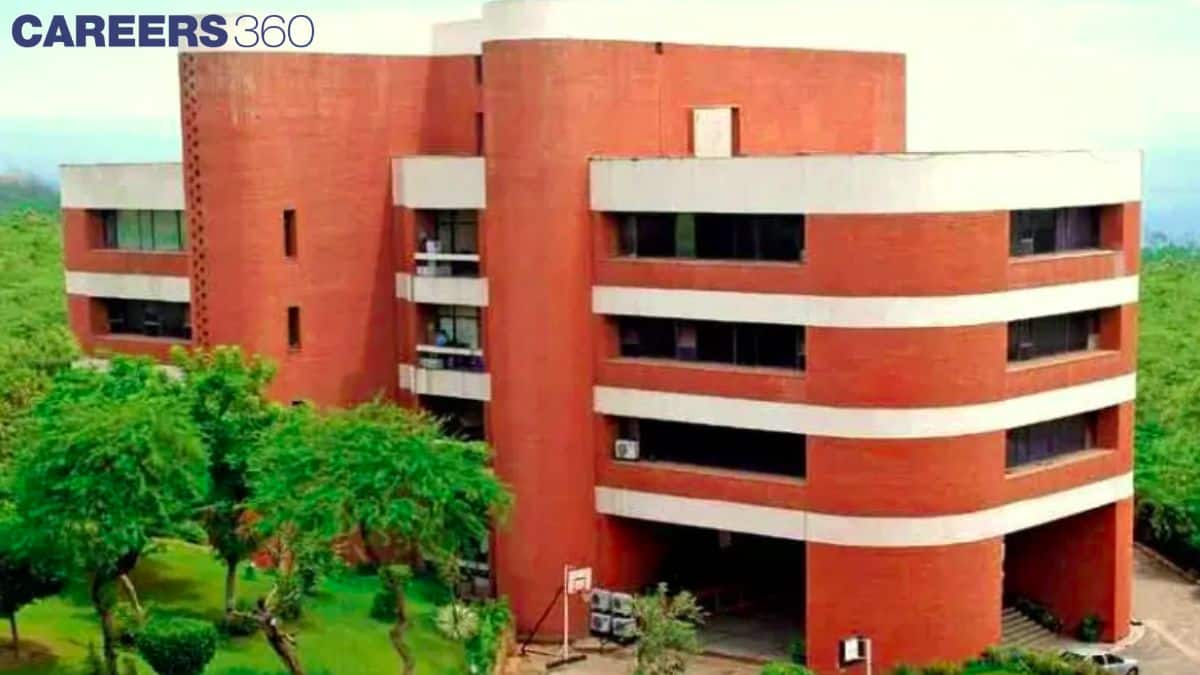
IMI announced a new academic direction for its flagship Post Graduate Diploma in Management (PGDM) programme, introducing a practice-led curriculum architecture designed around evolving industry requirements and changing global hiring patterns. As India’s first corporate-sponsored business school, the institution is leveraging its four-decade legacy to implement the overhaul across its Delhi, Bhubaneswar, and Kolkata campuses for the incoming AY 2026–28 batch beginning July 2026.
Also See: IMI Delhi Admissions 2026
The transition also marks the introduction of IMI’s new “One IMI” theme, bringing all three campuses under a unified curriculum architecture with aligned pedagogy, assessments, learning outcomes, and programme delivery standards.
The newly structured curriculum has been developed in collaboration with a global prominent management consulting firm, industry leaders, academic experts, and global practitioners. Based on extensive analysis of evolving recruitment trends and workplace expectations, the programme shifts focus from traditional credential-driven learning toward demonstrable functional capability. Artificial Intelligence (AI) fluency and Environmental, Social, and Governance (ESG) literacy have been embedded across disciplines, to keep up with the growing integration of technology and sustainability into business decision-making. The full transition will apply to the incoming July batch, while selected specialised electives will also be introduced for the current AY 2025–27 cohort. The curriculum introduces innovations like block weeks, core course labs, communication clinics to ensure Day One readiness in the graduates for the industry.
“Management education cannot afford to remain a lagging indicator of industry change; its responsibility is to anticipate and shape it,” said Dr. Suresh Ramanathan, CEO, IMI. “At IMI, we are intentionally moving beyond traditional lecture-led models toward a deeply experiential academic architecture. By anchoring the programme around career-aligned pathways and industry-led application, we aim to ensure graduates enter organisations equipped not just with conceptual understanding, but with the judgement, adaptability, and execution capability required to contribute from day one." Dr. Ramanathan exhorted students to remain curious and keep asking questions, adding that in a day and age when AI is used to generate answers, success depends not merely on using AI, but prompting it with better and deeper questions.
A key feature of the academic overhaul is the reorganisation of functional areas into seven specialised interdisciplinary Career Tracks aligned to distinct corporate pathways:
Consulting and Strategy
Market Expansion and Growth
Finance and Capital Markets
Product Management
People and Organisation
Analytics
Operations and Supply Chain
While foundational management principles remain central to the programme, traditional end-term examinations are increasingly being replaced with continuous assessments, simulations, communication clinics, block weeks, and mandatory industry-sourced labs beginning from the very first term.
These labs replace sanitised classroom case studies with live corporate challenges defined by incomplete data, operational ambiguity, and real-time decision-making pressure. Students will work directly on industry-linked business problems that mirror actual workplace complexity rather than theoretical simulations. This exposure culminates in a comprehensive three-term capstone project where students move from diagnosing live business problems to building and stress-testing new ventures and strategic solutions. The objective is to develop management judgement capable of responding to unpredictable market shifts and evolving business realities.
Commenting on how AI is reshaping workforce expectations, IMI alumna Dr. Arshiya Singh, Director – Global Compensation, Boston Consulting Group, said, "I don't think AI will take your job. However, the next person who uses it better than you will. So basically, despite technology and AI, there will actually be more roles than before. It's just that those roles might be different, and the expectations for existing roles might change too."
The transition from a classroom-led approach to an application-driven model ensures that IMI graduates leave with practical exposure to the technologies, frameworks, and decision-making environments now shaping modern business. The institution’s new academic direction reflects a broader shift in management education toward long-term career readiness, industry relevance, and measurable workplace capability.
Disclaimer: This content was distributed by IMI Delhi and has been published as part of Careers360’s marketing initiative.
Articles
Upcoming Bschool Exams

Certifications By Top Providers
Explore Top Universities Across Globe
List of Related colleges
Questions related to IMI Delhi
On Question asked by student community
Have a question related to IMI Delhi ?
Hello there,
With a 70 percentile it is not easy to make it in the IMT Hyderabad because the cutoff usually reaches 85-90+ for general category, even IMT Nagpur has low chances since the cutoff usually reaches 75-85. However, IMI Kolkata, is your safe option, since the cutoff is around
Hello,
At 96 percentile , he has good chances , in following Colleges especially due to strong academics and experience.
Very Good Non-IIM Options (High Chance)
-
IMT Ghaziabad
-
NMIMS Mumbai
-
XIMB Bhubaneswar
These colleges generally accept candidates in the 95–96 percentile range.
Hope it
Hello,
IMT Nagpur is generally better than IMI Kolkata in terms of brand value, alumni network, and corporate connections. IMT Nagpur has a higher average placement package (~9 LPA vs ~7 LPA at IMI Kolkata) and better faculty. however, IMI Kolkata is good for finance- related roles, so choose based
Hello Varun,
Based on your CAT raw score and profile, here's a breakdown of your potential calls and your chances for different institutes:
1. GIM Goa, GLIM Chennai, IMT Ghaziabad, IMI Delhi:
- GIM Goa : With a score of 55, GIM typically looks for candidates with a higher percentile. However,
Hi there,
Here is a brief comparison of the three colleges:
GIM Goa is very strong for its BFSI (finance-related) roles, while SIOM Nashik's key strength lies in operations. IMI Bhubaneshwar does not have a specific specialization strength, so in this aspect, GIM and SIOM stand stronger, with IMI weighing

Study Resources, Applications and Opportunities
Globally Recognized by AACSB (US) & AMBA (UK) | 18 LPA Avg. CTC for PGPM 2026
XAT- Xavier Aptitude Test 2027
Apply75+ years of legacy | #1 Entrance Exam | Score accepted by 250+ BSchools
Career Launcher Race To 99%ile In CAT 2026
Enquire13-hour master class to help you score 99+ percentile in CAT 2026
Common Admission Test 2026 (CAT 2026)
ApplyRegistration Start: 3 August 2026 | Last Date to Apply: 15 September 2026 (till 5 PM)
IBSAT 2026-ICFAI Business School MBA/PGPM 2027
ApplyAACSB Accredited | 40 LPA-Highest CTC | Scholarships worth 10 CR
Career Launcher - CAT Open Mock Test
EnquireGet Real CAT-like Experience | Attend Mock Test on 8th & 9th August 2026 | Timings: 8:30 AM | 12:30 PM | 4:30 PM