IBSAT 2026-ICFAI Business School MBA/PGPM 2027
AACSB Accredited | 40 LPA-Highest CTC | Scholarships worth 10 CR


SNAP 2025 Exam Analysis for slot 2 has been updated on this page. Candidates will also get the access to memory based questions and complete difficulty level here. We have now shared a detailed analysis of SNAP 2025 Test 3 for both slots along with memory-based questions on this page. Candidates can go through it to understand the overall difficulty level of today's exam.
This Story also Contains
The analysis will cover section-wise difficulty level, ideal attempts, question patterns, and expected cut-offs. Based on earlier SNAP exams this year, Test 3 is expected to follow a similar structure with an overall moderate difficulty level. This page will be updated live after Slot 1 concludes.
SNAP 2025 is being conducted as per the official exam pattern that specifies the structure of the paper and the marking scheme. Below is the expected SNAP 2025 exam pattern:
| Particulars | SNAP Exam Pattern |
|---|---|
Exam duration | 1 Hour (60 minutes) |
Sections | General English, Analytical & Logical Reasoning, Quantitative, Data Interpretation & Data Sufficiency |
Total questions | 60 |
Maximum marks | 60 |
Mode | Computer-Based Test (CBT) |
Number of attempts | 3 |
| Section | Number of Questions | Total Marks |
|---|---|---|
General English: Reading Comprehension, Verbal Reasoning, Verbal Ability | 15 | 15 |
Quantitative, Data Interpretation & Data Sufficiency | 20 | 20 |
Analytical & Logical Reasoning | 25 | 25 |
SNAP Total Marks | 60 | 60 |
SNAP Marking Scheme
-0.25 for each incorrect answer
No sectional time limit
| Shift | Exam Time |
|---|---|
Shift 1 | 2:00 PM – 3:00 PM |
Shift 2 | 4:30 PM – 5:30 PM |
The SNAP 2025 exam varies slightly from one test to another, making a test-wise breakdown crucial for understanding shifts in difficulty, trends in question types, and overall performance expectations. This analysis outlines how each test differs in section-level difficulty, ideal attempt ranges, and expected scores, allowing candidates to evaluate their performance and compare patterns across General English, Analytical & Logical Reasoning, and Quantitative aptitude + DI & DS.
This comparison helps aspirants understand slot-wise changes, refine score predictions, and track broader exam trends. Below, you will find the complete Test 1 analysis for each section, and detailed insights for subsequent tests will be added after their respective exam days.
The difficulty level ranged from easy to moderate.
A strong focus on vocabulary: idioms, proverbs, synonyms, and similar meanings.
Fillers and prepositions were asked in simple, context-based formats.
One question tested the meaning of “prognostication.”
An analogy question appeared (example: soporific → sleep).
The section was moderate and largely approachable.
Two questions were based on a number series.
A data sufficiency problem centred on a government subsidy context.
Multiple items tested blood relation concepts.
A floor arrangement puzzle involving lunch items was included.
A three-person puzzle appeared.
Seating arrangement questions featured:
A set of six people facing North.
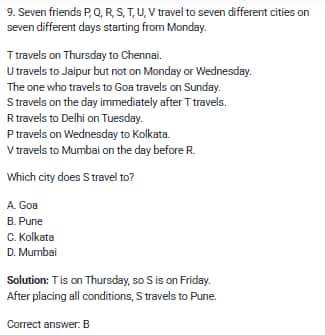
Another arrangement governed by conditions on P, Q, R, S, T.
Syllogism and statement–inference questions were present.
One question was asked from coded reasoning.
Overall difficulty was moderate to high compared to the other sections.
The section included a blend of arithmetic, algebra, geometry, and application-style problems.
Key topics:
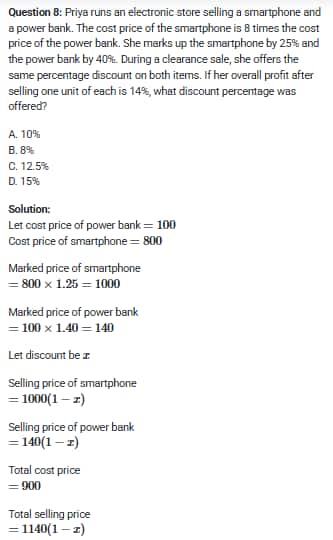
Profit & Loss
Average weight
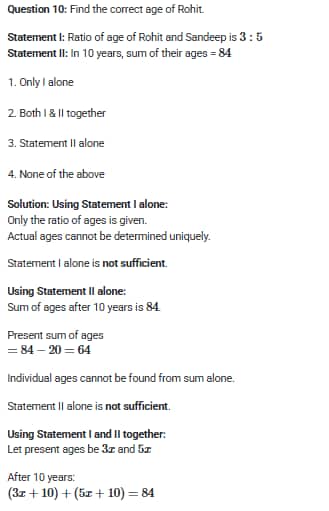
Age-based questions
Voting arithmetic
Remainder theorem
Concentric circles
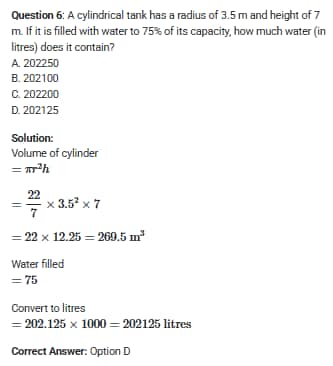
Cylinder calculations
Geometry featured a Triangle Park problem based on a 15–14–13 triangle.
SI–CI difference question: 2 years at 10%, difference Rs 150, find the principal.
A pipe system problem involved three pipes with combined filling and emptying speeds.
Work & Time: Amit and Brijesh are working together, with Amit leaving 6 days earlier.
LCM-based problem: traffic lights changing at 48 s, 72 s, 108 s.
Trigonometry:
tanθ+cotθ=4, find tan2θ+cot2θ.
Sequence question:
Sn=3n2−2n, find the 5th term.
Logarithmic equation:
log2x+log2(x−2)=x.
A time–distance question referencing the Vande Bharat Express.
Permutation: number of arrangements of the word DELHI.
Test centres are available in 70+ cities across India | 75,000+ aspirants apply for the NMAT exam | Accepted by 58+ institutions like NMIMS, KJSIM, ISB, SPJIMR and Great Lakes.
75+ years of legacy | #1 Entrance Exam | Score accepted by 250+ BSchools
Candidates across Slot 2 agreed that VA was comfortable and high-scoring.
Slot 2 featured no Reading Comprehension, unlike Slot 1, which had one brief business-oriented RC.
The section leaned strongly on grammar application, including:
A large share of error-spotting questions
Grammar-driven fill-in-the-blanks
A few active–passive voice transformations
Light sentence correction/improvement items
Vocabulary inputs included:
Synonyms
Antonyms
Idioms & phrases
A couple of analogy-based questions
A single para-jumble grounded in an economics theme was seen as approachable.
Students appearing on 12 December should particularly revise:
Tenses
Pronouns
Conjunctions
Subject–verb agreement
Accuracy was expected to remain very high given the clarity and simplicity of questions.
LR continued to be the make-or-break segment for most aspirants.
Slot 2 unexpectedly introduced multiple puzzles, unlike Slot 1:
Two puzzles plus one arrangement, all solvable within the time for prepared students.
The section covered a diverse mix of topics:
Blood relations
Direction sense
Series-based problems
Coding–decoding (2 questions)
Syllogisms
Number-based reasoning (identify the missing 6th value)
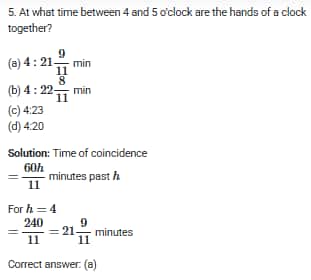
Calendar & clock questions (fewer than Slot 1’s heavier presence)
Critical reasoning items (3–4 questions), including assumption, cause–and–effect, and inference
Key recommendation:
Do not skip Calendar & Clock — these are recurring topics and will likely reappear.
LR also included a quick DI-style set:
A simple table-based set that many missed due to time pressure, despite being extremely easy.
Slot 2 Quant felt slightly more demanding than Slot 1 but remained manageable.
Arithmetic dominated the section, exactly in line with SNAP’s usual pattern.
Frequently reported topics included:
Simple & Compound Interest (1–2 questions)
Time & Work (1 question)
Profit & Loss
A basic upstream–downstream problem
Ratio, percentage, and proportion
Additional subsections showed up as well:
Logarithms: 2 questions
Coordinate Geometry: 3 questions (more than Slot 1)
Mensuration: hexagon fold/perimeter-type problem
Probability & P&C distribution:
Slot 1 had Probability
Slot 2 featured one P&C question
Algebra contributed a couple of basic equation questions.
Number System appeared through a remainder theorem question.
Quant DI included:
A small bar/line/table graph offering 3–4 quick, straightforward questions
Overall tone: direct formula application, minimal trickery, but required solid speed.
| Area | Slot 1 | Slot 2 |
|---|---|---|
RC | 1 RC | None |
LR Puzzles | Very few | 2 puzzles + 1 arrangement |
VA Difficulty | Easy | Easy |
LR Difficulty | Easy–Moderate | Slightly more scoring |
Quant | Easy–Moderate | Slightly more moderate |
Clock–Calendar | Heavy presence | Fewer, but still asked |
SNAP 2025 Test 2 Slot 1 Paper was slightly longer compared to SNAP 2025 Test 1 Paper. However, despite the increased length, the overall difficulty level of the question paper was easy.
The overall difficulty level of the exam was easy to moderate and was easier compared to Test 1.
The overall difficulty level of the Logical Reasoning section was moderate.
Topic-wise distribution and difficulty:
Critical Reasoning: 3–4 questions; easy in terms of difficulty
Arrangements: 3 questions, including a number-based pyramid arrangement
Family Tree and Blood Relations: 2 questions
Syllogisms: 2–3 questions
Coding–Decoding: 2 questions
Series: 1 question; easy
Calendar: 2 questions
Clock: 2 questions
The Quantitative Aptitude section was lengthy and calculative, making time management a key challenge for many candidates. Overall, this section was on the tougher side compared to the SNAP Test 1 Paper.
Topic-wise distribution:
Percentage: 1 question
Logarithms and Indices: 2–3 questions
Time and Work: 2 questions
Time, Speed, and Distance: 2 questions
Mixtures and Alligation: 2 questions
Unit digit and LCM HCF: 1 question
No questions were asked from the DI section.
The paper was similar in approach to Slot 1, making it overall doable for prepared candidates.
One question was based on idioms and phrases.
Antonyms- and synonyms-based questions were included.
The overall difficulty level was easy.
One question was based on a series.
Critical Reasoning questions were easy.
Two questions were from coding–decoding.
3–4 questions were from the clock and calendar.
One question was based on a circular arrangement of 8 people.
2–3 questions were from the arrangements overall.
Quantitative Aptitude was easy to moderate in terms of difficulty level.
The Arithmetic section was lengthy and calculative.
Most of the questions were from Arithmetic.
Coordinate Geometry: 1 question.
One question was based on a table, which was calculative (based on the highest percentage of car production).
SNAP 2025 Test 3 Slot 1 had an overall easy to moderate difficulty level. General English and Logical Reasoning turned out to be scoring sections, while Quantitative Aptitude played a key role due to its lengthy and calculation-intensive questions. Candidates who managed their time well and maintained calculation accuracy were able to perform better.
Compared to SNAP Test 1, SNAP 2025 Test 3 Slot 1 was relatively easier and followed a familiar exam pattern similar to other slots. Although there were no unexpected changes in the paper structure, many candidates felt the exam was lengthy, making time management an important factor for completing the test comfortably.
The General English section was easy and highly scoring for well-prepared candidates. The question mix was similar to previous SNAP tests, with a strong focus on grammar concepts.
Key Topics Covered:
Idioms and Phrases
Proverbs-based question
10–11 questions based on Grammar
Modals and Auxiliary Verbs
Parts of Speech
Pattern closely matched SNAP Test 1 and Test 2
Accuracy levels were high as most questions were direct and concept-based.
The Logical Reasoning section was easy, allowing candidates to attempt most questions confidently. Critical reasoning questions were straightforward and not time-consuming.
Topics Asked in Logical Reasoning:
Alphanumeric Series – 1 question
Binary Logic – 1 question
Calendar-based question (easy)
Decision Making – 1 question
3 questions from Critical Reasoning
Blood Relations – 1 question
Clocks – 1 question
Coding–Decoding – 1 question
Syllogism – 1 question
This section rewarded speed and conceptual clarity.
The Quantitative Aptitude section was the most time-consuming in SNAP 2025 Test 3 Slot 1. Candidates reported lengthy and calculation-heavy questions, making it tougher than QA sections in earlier SNAP tests.
Topic-wise Question Distribution:
Ratio and Proportion – 1 question
Profit and Loss – 1 question
Time and Distance – 1 question
Logarithms – 2 questions
Permutation & Combination and Probability – 5 questions (1 tricky)
Number Series – Easy
Simple Interest & Compound Interest – 2 questions
Percentage – 1 question
Averages – 1 question
Trigonometry – 2 questions
Modern Mathematics – 4–5 questions (dominant)
Geometry – No questions asked
This section demanded strong calculation speed and smart question selection.
Overall, SNAP 2025 Test 3 Slot 2 was easier than SNAP Test 1 but slightly trickier than SNAP Test 2. The paper fell in the easy to moderate range and was clearly easier than SNAP 2024. While the difficulty was manageable, a few sections felt lengthy and time-consuming, especially due to calculation-heavy questions.
The General English section was largely straightforward and scoring for most candidates.
The overall difficulty level ranged from easy to moderate.
Fill-in-the-blank questions were asked, focusing on vocabulary and contextual usage.
Preposition-based questions appeared, testing basic grammar concepts.
Around three idiom-based questions were included, all familiar and commonly asked.
The section was similar in nature to previous SNAP papers, with no unexpected twists.
Candidates with decent grammar fundamentals could attempt most questions comfortably.
The Logical Reasoning section was mostly on the easier side, with a mix of familiar patterns.
The overall difficulty level was easy to moderate.
Four questions from a series were asked, including number-based and pattern-based series.
A question based on the series tested basic mathematical reasoning.
Critical Reasoning had a significant presence, with five questions in total.
One clock-based question was asked, following a standard SNAP format.
Only one Critical Reasoning question was tricky, while the rest were fairly direct.
This section offered good scoring potential with smart question selection.
The Quantitative Aptitude section was the most demanding in terms of time management.
The section was moderate in difficulty but lengthy.
1–2 geometry questions were asked; these were time-consuming due to calculations.
AP and GP questions appeared and were similar to those seen in Slot 1.
Time and Work contributed two questions, both calculation-based.
One logarithm question was asked, testing basic log properties.
The section was largely calculative, which increased the time pressure.
Accuracy mattered more than attempting a high number of questions here.
Difficulty level: Easy to Moderate
Length: Moderate to Lengthy
Best sections to score: General English and Logical Reasoning
Most time-consuming section: Quantitative Aptitude
With balanced preparation and smart time allocation, SNAP 2025 Test 3 Slot 2 was a well-manageable paper and offered good scoring opportunities, especially for candidates strong in reasoning and verbal ability.
| Parameter | Slot 1 | Slot 2 |
|---|---|---|
Paper Length | Slightly longer | Similar to Slot 1 |
Overall Difficulty | Easy overall | Easy to Moderate |
Nature of Paper | Balanced | Slightly more QA-heavy |
Time Management | Manageable except QA | More pressure due to QA |
This section includes the updated SNAP 2025 ebook featuring Test 1 memory-based questions and a detailed section-wise analysis. It brings together all key insights from the first test, offering candidates a focused resource to understand the exam pattern, question style, and difficulty before attempting the upcoming sessions.
| SNAP 2025 Test 1 Memory-Based Questions and Analysis | Download Now |
1- If TACITURN : GARRULOUS, then Insolvent : ________
2- The startup would not have secured the funding _________ its innovative business model and the founder’s compelling pitch.
if not for it was
unless it was for
if it had been for
had it not been for
3- The old bureaucratic system was a labyrinth of red tape, where a single request could take months to be processed.
Simile
Metaphor
Paradox
Euphemism
4- The old library in Pune contained several recondite texts on ancient Indian philosophy that were accessible only to a handful of scholars.
Popular
Manifest
Esoteric
Pedestrian
5- The drone flew high above the city of Jaipur, capturing breathtaking aerial footage.
Identify the part of speech for the underlined word.
6- The _______ crafted silver filigree from Cuttack is _______ sought after by collectors worldwide.
Delicately, high
Dedicate, high
Delicate, highly
Delicately, highly
7- The new quality control manager was determined to ________ all the outdated procedures in the factory.
Do away with
Get along with
Give in to
Make up to
8- The CEO’s decision to resign came as a _________ shock to the employees and the stock market.
Crude
Raw
Rude
Stark
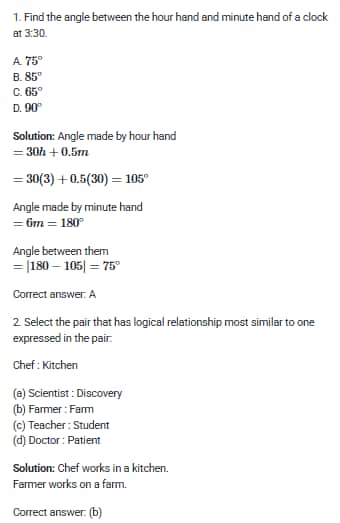
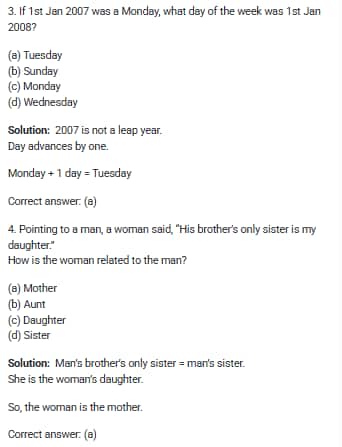
1- What was the day on 15th August, 1947?
2- Which year matched the calendar of 2007?
3- If a clock gets slow by 5 minutes every hour, and it was correct at 6 AM on Monday, what will be the time at 6 PM on Tuesday?
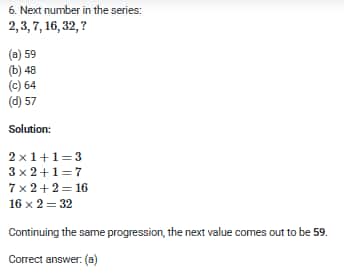
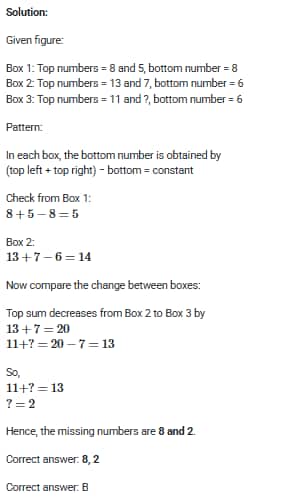
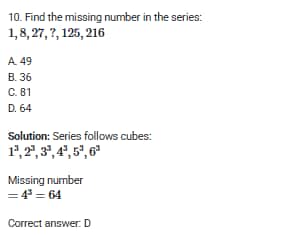
4- Find the missing number: 5, 7, 13, 25, 45, ______
5- Find the missing term: Q3F, S5J, U8N, W12R, ______
6- Find the missing term: 1, 2, 6, 30, 210, ______
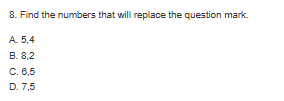
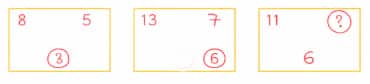
7- Which letter will replace the question mark?
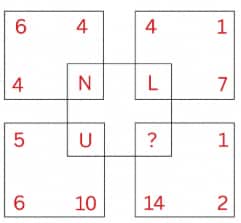
R
Q
S
P
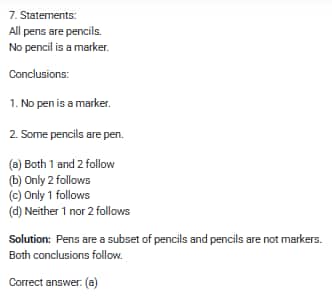
8- Statements:
Some cats are black.
Some black things are big.
Conclusions:
Some cats are big.
All big things are black.
9- Find the missing number: 2, 10, 30, 68, 130, ______
10- Statements:
All metals are conductors.
No insulators are conductors.
Conclusions:
No metal is an insulator.
Some calculators are metal.
Neither 1 nor 2 follows
Only 1 follow
Only 2 follow
Both 1 and 2 follow
Quantitative Aptitude
1- Find the unit digit of 1! + 2! + 3! + … + 100!
2- If a man covers 1/3rd distance at speeds 10 km/h, 20 km/h, and 60 km/h, find the average speed.
3- If the HCF of two numbers is 15 and their product is 1800, find the LCM.
4- Two dice (red and blue) are thrown. Find the probability that the sum is prime and the number on red dice is greater than blue dice.
5- Given two pairs of lines:
K:
x+2y=11
2x−y=7
L:
x+2y=11
2x+y=7
Find the difference in values of x in K and L.
6- Given points A(1,2), B(3,8), C(7,k) are collinear. Find k.
7- If 10 men take 12 days to complete work and 12 women take 15 days to complete the same work, find the time taken by 6 men and 6 women.
8- Evaluate: sin3θ+cos3θsinθ+cosθ+sin3θ−cos3θsinθ−cosθ
9- A furniture store makes a profit of 25% after offering a discount of 20% on a sofa. If the cost price (CP) increases by 10% and the store still offers the same 20% discount, what is the new profit percentage?
10- A laddu from a shop has a radius of 3.5 cm. If 10 such laddus are packed in a cubical box, what is the approximate total volume occupied by 10 laddus (in cm)?
Candidates can find the SNAP Test 3 2025 memory based questions asked in the exam from the section below.
General English
1. The investigative journalist uncovered a _____ between corrupt officials and powerful construction lobby in Mumbai.
A. Cover-up
B. Hidden deal
C. Up-cover
D. Covering up
Answer- Hidden deal
2. The _______ of the factory was a major blow to the local economy, as it was the largest employer in the small town of Tiruppur.
A. Close up
B. Close down
C. Closedown
D. Shut off
Answer- Closedown
3. In compliance ___ new environmental regulations, the factory in Manesar was retrofitted ___ a state-of-the-art filtration system.
A. with, with
B. of, with
C. to, by
D. for, into
“In compliance with” is the correct prepositional phrase.
“Retrofitted with” is the correct verb–preposition combination.
. Correct answer: (a)
4. For past 5 years, the weaver of Kanchipuram ___ ancient techniques with modern designs, a fusion that now ___ international acclaim.
A. blend, receives
B. have been blending, is receiving
C. were blending, received
D. had been blending, has been receiving
“For past 5 years” indicates an action continuing till the present, so present perfect continuous is required.
The second blank refers to a present ongoing result, so present continuous fits.
Correct answer: B
5. ___ had the monsoon arrived in Mumbai ___ the city’s drainage systems were overwhelmed, leading to widespread waterlogging.
A. As soon as, then
B. No sooner, than
C. Not only, but also
D. Scarcely, then
The correct correlative conjunction is “No sooner … than”, used for immediate succession of events.
Correct answer: B
6. You ___ have told me you were coming to Delhi; I ___ have arranged a car to pick you up from the airport.
A. must, will
B. may, must
C. can, should
D. could, would
The sentence expresses a missed past possibility.
“Could have” and “would have” correctly express unreal past conditions.
Correct answer: D
Logical Reasoning
Quantitative Aptitude


A detailed SNAP 2025 analysis is essential because:
It helps candidates estimate their expected overall score and percentile.
It allows students to compare the difficulty level of Test 1 vs Test 2 vs Test 3.
Students appearing for later tests can refine their strategies based on the question type distribution and sectional trend shifts.
MBA aspirants planning for SNAP 2026 can understand long-term trends and prepare accordingly.
The analysis also gives clarity on cutoffs for SIBM Pune, SCMHRD, and other top SIU colleges.
The SNAP 2025 Exam Analysis will play a crucial role for both current-year aspirants who want to estimate their performance and future aspirants who want to understand exam trends. As each test concludes, this page will provide the detailed analysis covering difficulty level, question distribution, section performance, and expected cutoffs. Stay tuned for real-time updates on Test 1, Test 2, and Test 3.
Frequently Asked Questions (FAQs)
Memory-based questions for all three tests will be updated on the same page after each exam day for candidates to review.
Yes, slight variations are common across tests and slots. A test-wise analysis helps identify these changes in difficulty, question types, and topic distribution.
It helps candidates understand section-wise difficulty, good attempts, expected cut-offs, and overall performance trends across different tests.
The analysis for Test 1, Test 2, and Test 3 will be updated immediately after each test concludes on 6th, 14th, and 20th December 2025.

On Question asked by student community
You can find all the information here:
CAT- https://bschool.careers360.com/articles/cat-exam-dates
SNAP- https://bschool.careers360.com/articles/snap-exam-dates
Dear Student,
SIBM Nagpur SNAP 2025 Cutoff is expected to be on higher side this year, around 93+ percentile if we look at the trends of the previous years. As per the SNAP 2025 score vs percentile, to match the SIBM Nagpur SNAP 2025 cutoff one need to score around
Hi Student
Getting 70 percentile in the SNAP examination is well within the range of SSBF Pune. You can register and apply for admission to the college. Click on the link below to learn more about the admission process, dates, fees, etc.
Hello candidate,
SIBM Pune over the years has been known for its holistic development of students . SIBM Pune courses include MBA, MBA Executive and MBA Innovation and Entrepreneurship programmes in various specialisations.
Symbiosis Centre for Management and Human Resource Development, Pune was established in 1993. Admission to SCMHRD Pune
Yes, you can definitely prepare better for the SNAP Quantitative Ability section by keeping a complete formula list with you. Instead of memorising everything randomly, it helps to organise formulas chapter-wise so you can revise faster.
Here is a useful formula list for the SNAP Quant section:
1. Arithmetic
•

Globally Recognized by AACSB (US) & AMBA (UK) | 18 LPA Avg. CTC for PGPM 2026
75+ years of legacy | #1 Entrance Exam | Score accepted by 250+ BSchools
6-Hour Masterclass to help you score 99+ percentile in CAT 2026
400+ Recruiters | Highest CTC 25 LPA | Average CTC 8 LPA | 92% Placements in 2025 | Ranked as Platinum Institute | Awarded Best Business School of the Year
Test centres are available in 70+ cities across India | 75,000+ aspirants apply for the NMAT exam | Accepted by 58+ institutions like NMIMS, KJSIM, ISB, SPJIMR and Great Lakes.
Registration Start: 3 August 2026 | Last Date to Apply: 15 September 2026 (till 5 PM)